Categories
Media appearances The Business of Mongabay

The Reuters Institute profiles Mongabay

I recently spoke with Maurice Oniango for the Reuters Institute for the Study of Journalism at the University of Oxford about Mongabay’s evolution from a personal rainforest website into a global environmental newsroom. One theme we discussed was how journalism models shape coverage itself. Advertising-driven media often pushes outlets toward scale, speed, and broad audience [Continue reading]

Categories
Talks

They restored the forest. Then they gave it back.

Last Thursday I gave the keynote address at the Pacific Forest Trust’s Forest Fete gala. I spoke about four lessons I’ve learned over 27 years at Mongabay on how to reach and engage audiences: Identifying your audience (who you’re actually trying to reach) Framing (how the issue is presented) Narrative (what makes people stay and [Continue reading]

Categories
Commentary and analysis

When philanthropy undervalues the information ecosystem

“Your work is not a priority for us.” This is one of the most common responses I hear from philanthropic foundations. Silence is more common still. I understand why a foundation might decline to fund a particular organization or project. What concerns me is a broader pattern: philanthropy consistently underinvests in the information ecosystem that [Continue reading]

Categories
Commentary and analysis

How information enables action

It is tempting, when thinking about change, to look for the actor at the center of the story. The donor whose gift made something possible. The organization whose strategy unlocked progress. The individual whose decision altered a course of events. These figures are easy to name and easier still to photograph. They offer a sense [Continue reading]

Categories
Commentary and analysis Media appearances Talks

Beyond the doom loop: the case for informed optimism

Conservation has never lacked alarming facts. What it increasingly lacks is attention. After years of grim headlines, many people do not just feel sad. They disengage. They stop reading, stop donating, and in some cases stop believing that anything meaningful can still be done. That reality is no longer a side issue for the movement. [Continue reading]

Categories
The Business of Mongabay

The value of news in the era of AI

The arrival of generative artificial intelligence has unsettled journalism in familiar ways. Traffic models look fragile. Copyright is contested. The marginal cost of producing words has collapsed. It is tempting to conclude that news is becoming less valuable just as machines become more fluent. So far for Mongabay, the opposite is happening. AI systems are [Continue reading]

Categories
Commentary and analysis

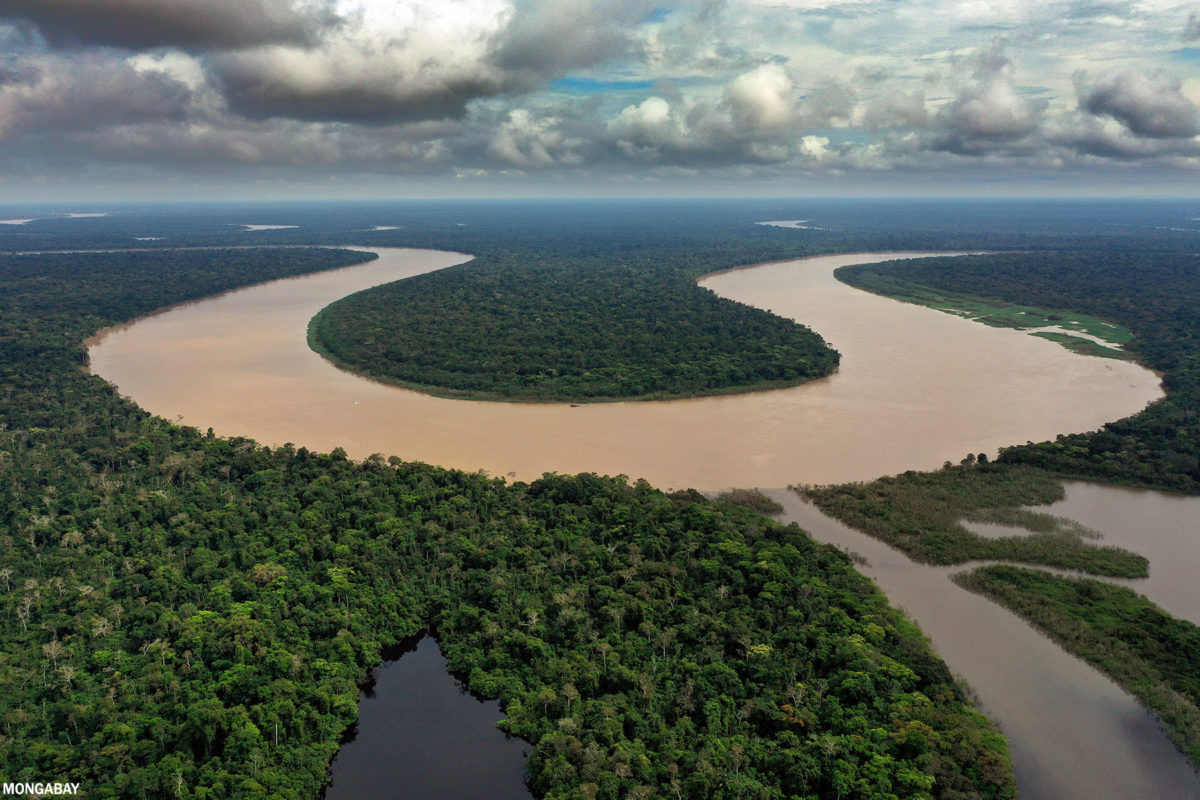
How to talk about saving the Amazon rainforest

Efforts to protect Amazonia also face a communications challenge. Four years after Indigenous organizations helped carry a landmark motion through the world’s largest conservation congress—an appeal to protect 80% of Amazonia by 2025—the region has endured its worst drought in more than a century and fires on a continental scale. The coalition behind that target [Continue reading]

Categories
Announcements The Business of Mongabay

A new approach to reach decision-makers on nature’s frontlines

For most of my career, I’ve tried to ensure that people have the information they need to make decisions that safeguard nature. Yet the people whose choices often matter most for forests, fisheries, and wildlife are usually the least served by conventional media. Farmers, fishers, Indigenous land stewards, and community leaders often operate in what [Continue reading]

Categories
Random pieces

From doom to agency: talking about how to save the Amazon rainforest

I recently contributed a section on how to communicate about the Amazon for The Endangered Amazonia report, which came out this week in Spanish, Portuguese, and English. Here’s a brief summary of my contribution. From doom to agency: Talking about saving Amazonia Many stories about the Amazon read like elegies. Drought, smoke, lawlessness—each headline darker [Continue reading]

Categories
Media appearances

The bridge between knowing and caring (Resilience Gone Wild podcast appearance)

When I think about what makes someone care about the natural world, it rarely begins with statistics or graphs. It begins with a moment. For me, it was an encounter I had at age 12 with frogs in the Ecuadorian Amazon—a fascination that turned to urgency when I later read about an oil spill near [Continue reading]

Categories
Random pieces

In a post-literate age, written journalism matters more than ever

In September 2025, James Marriott argued in Cultural Capital that we are entering a “post-literate society.” He traced how the eighteenth-century “reading revolution” seeded democracy, science, and civil society, and warned that the dominance of the smartphone and short-form video is now eroding the habits of deep reading that underpinned those gains. It is a [Continue reading]

Categories
Random pieces

Rethinking the narrative: Big environmental change needs smaller stories of success

For decades, conservationist Enrique Ortiz has worked to protect some of the world’s most vital ecosystems. But in his recent commentary for Mongabay, he voiced a stark truth that many in conservation rarely say aloud: Environmental messaging is failing to inspire enough people to act. The facts are known, yet they rarely change minds. To [Continue reading]

Categories
The Business of Mongabay Tips

Choosing the right platform for impact

Not all platforms are worth it After I shared the story behind Mongabay’s decision to deprioritize Facebook, several people asked: Where should impact-driven organizations focus their energy instead? There’s no one-size-fits-all answer. The best platform depends on your audience and what you want them to do with the information you share. Are you trying to [Continue reading]

Categories
Talks

You can’t fact someone into caring – Villars Summit recap

You can’t fact someone into caring. Facts inform, but stories move. That idea came up often last week during discussions at The Villars Institute. The science is clear: our planetary systems are under immense stress. Yet, we’ve failed—dramatically—to communicate that reality in ways that resonate with most people. The challenge is compounded by the worsening [Continue reading]

Categories
Tips

The most annoying way to open an email?

I trust you are well. It’s meant to sound polite. It often isn’t. Over the years, I’ve come to see that how we open conversations matters. Yet this phrase lingers—empty, impersonal, and detached. This may seem trivial given everything happening in the world, but communication matters. If we want it to be meaningful, let’s rethink [Continue reading]