
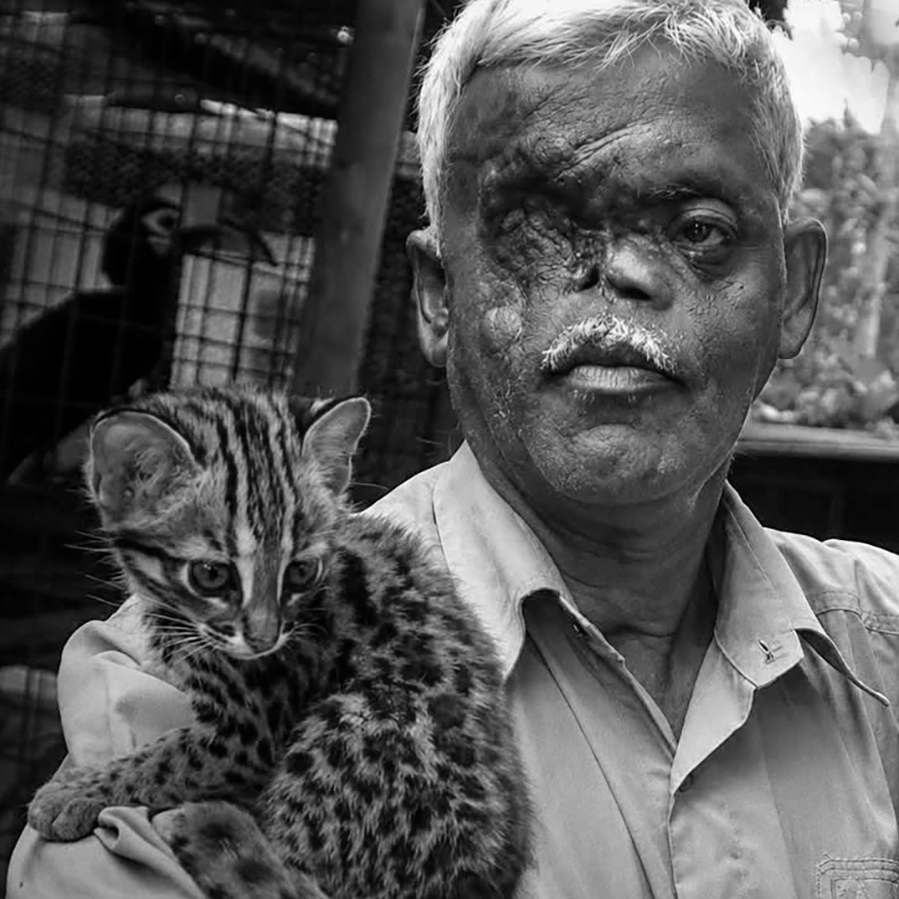
The bear came out of the forest with enough force to kill him. It mauled the hunter badly and cost him an eye. During three months in a hospital, he began asking why he was hunting and killing animals.
Hunting had come through his family. His father and grandfather were known around Sreemangal, in northeastern Bangladesh, for killing leopards, wild boars, and other animals that threatened people or crops. As a boy, Sitesh Ranjan Deb accompanied his father into the forest. He later became a gunsmith and guide, skilled at reading tracks and understanding animal behavior.
After the bear attack, Deb, who died on July 14th, gave up hunting. He began rescuing injured animals, removing snakes from homes, treating wildlife confiscated from traffickers, and returning recovered animals to the forest. The grounds of his home became a treatment center and eventually developed into the Bangladesh Wildlife Service Foundation.
The center remained part of the household. Jungle-cat cubs, pythons, slow lorises, monkeys, and birds occupied courtyards, cages, and improvised treatment spaces. Deb kept photographs of former patients. Two bears he raised, Rambo and Jumbo, ate pumpkins. A half-dead infant Phayre’s leaf monkey recovered from floodwater was wrapped in warm cloth and fed lukewarm milk a few drops at a time. Fish farming helped cover expenses.
Forest officers, police, wildlife groups, and local residents learned to call him. His hunting experience helped him judge where frightened animals might hide and how to catch them without causing further harm. He often invited officials, reporters, and villagers to releases, using the occasion to discuss trafficking, habitat loss, and the growing movement of wildlife into settlements.
Deb had watched forests, wetlands, and scrub around Sreemangal disappear. Animals entering villages were often beaten, trapped, or killed. He came to believe that the field skills once used for hunting were now more useful in rescue work.
The center depended on family labor, donations, and inconsistent official support. Deb worried about its future, but he resisted waiting for ideal conditions. “You just do it,” he said.
When a call came, he collected the animal, found room for it at home, obtained the food it needed, and worked toward the day when its cage could be carried back to the forest and opened.
Sitesh Ranjan Deb turned a hunter’s knowledge to saving wildlife
