
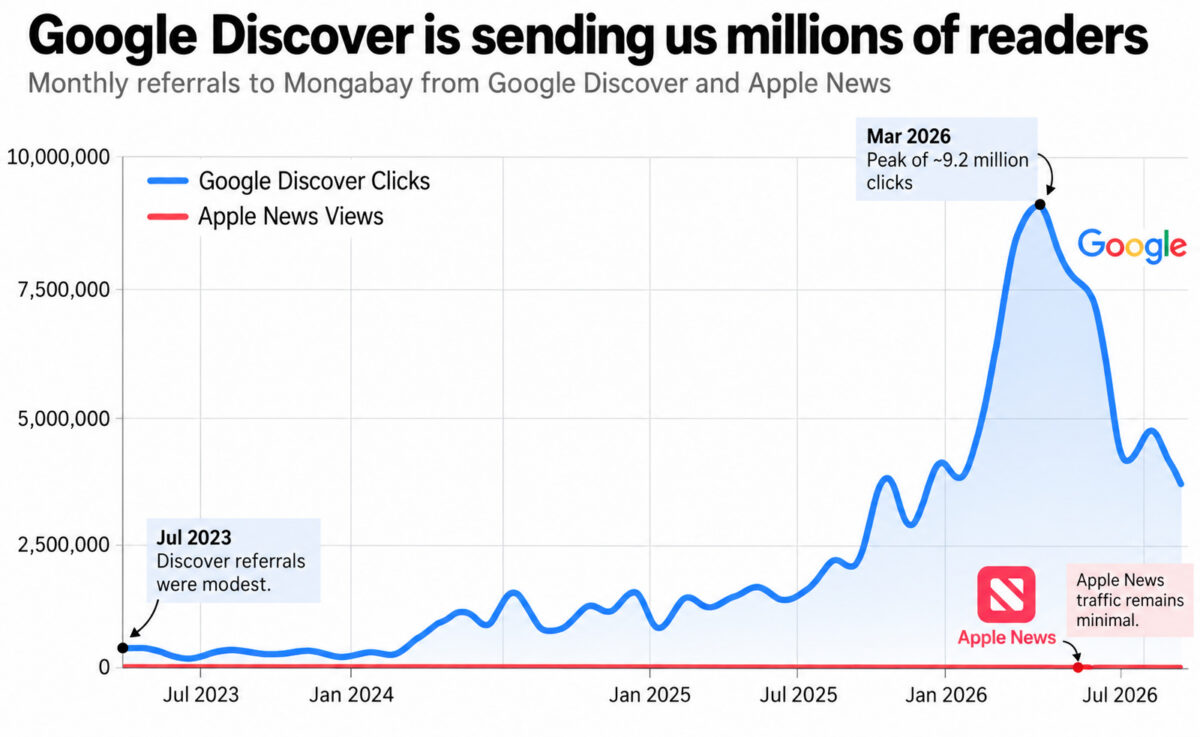
In a recent post I noted that Mongabay’s evergreen content has been getting crushed in the AI chatbot era, but that our news traffic is surging.
A large part of this trend is referral traffic from Google Discover, the AI-powered recommendation engine that suggests stories on Android devices and other Google surfaces. Through the first eight months of 2026, Discover referrals climbed from 9 million to 46 million across our core news sites.
While that is a welcome development at a moment when many news outlets are reporting declining traffic, Google recently announced that it is testing a change that could be devastating to publishers.
Dubbed “Dive Deeper,” Discover would display AI-generated summaries of news articles instead of snippets that take users directly to publishers’ stories.
I expect that if Google implements this change, many niche publishers who produce exclusive content will seriously consider blocking Googlebot from their sites. If that happens, it could usher in an era of more homogenized news, with more content disappearing behind paywalls. Apple News is unlikely to fill the gap, at least for us.
A core aspect of Mongabay’s mission is to make information freely available, so we won’t be putting our stories behind a paywall. Instead, we’re developing new ways for readers to engage with our reporting. For example, we just launched revamped versions of our mobile app for Android and iOS users.
The app allows users to personalize their Mongabay experience through custom feeds based on topic, place, and format. It is also ad-free.
