
In the early 1990s, the logging roads running through Sarawak’s Upper Baram became the site of a bitter confrontation. Penan families built wooden barricades across red-dirt tracks, blocking bulldozers and timber trucks and facing units of the Police Field Force. As the protests drew international attention, the government of Chief Minister Abdul Taib Mahmud restricted media access and portrayed the Penan as backward people manipulated by foreign activists. International environmental groups offered a different but equally simplified story, presenting them as forest dwellers engaged in a timeless struggle to protect an untouched Eden.
Pete Brosius, an anthropologist who conducted research with the Penan for four decades, spent much of his career complicating both versions. Brosius died July 29th in Athens, Georgia, at 72.
He had already spent years in Sarawak by the time the logging conflict attracted international attention. His research showed that Penan responses to logging varied substantially between communities. Some resisted through blockades. Others negotiated with logging companies or sought compensation and employment.
For Brosius, those differences reflected distinct histories and relationships with neighboring peoples, government officials, traders, and the forest itself. Penan people were making their own decisions under difficult circumstances, rather than simply following the direction of foreign activists.
That argument put him at odds not only with the Sarawak government and timber interests, but also at times with environmental campaigners.
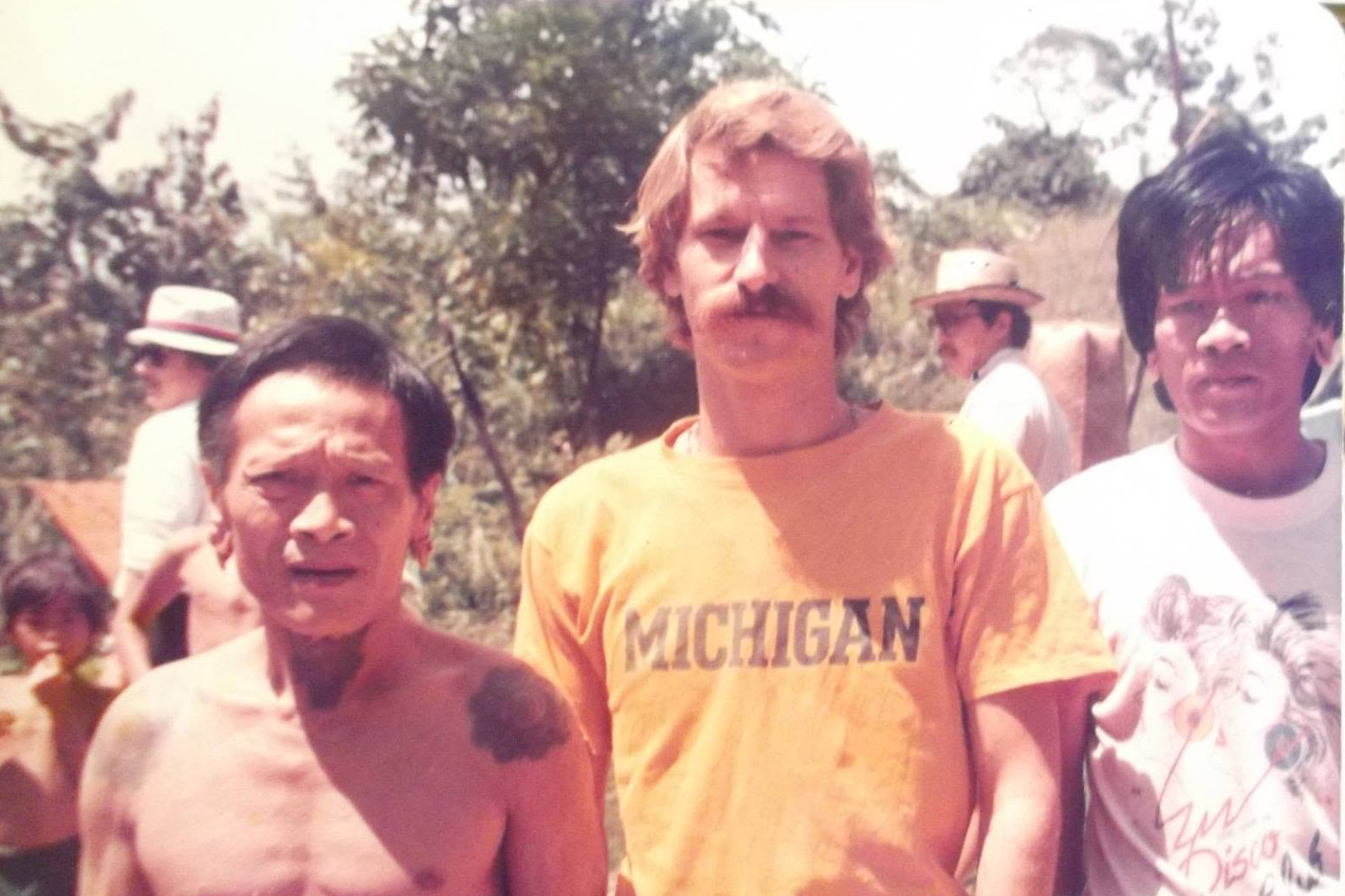
In a series of papers in the 1990s, Brosius examined how international campaigns changed the way Penan culture and environmental knowledge were described. Complex local disputes over land and political power could become simpler stories designed for audiences in Europe and North America.
Brosius argued that this could come at a cost. If Indigenous people were presented as living outside markets or modern politics, their claims could become easier to dismiss once they negotiated with a company, accepted paid work, or made other choices that did not fit the image created for them.
His work in Sarawak eventually carried consequences far outside academic anthropology. For decades, the legal recognition of customary land in Sarawak favored communities that could point to land cleared for agriculture. Under the Sarawak Land Code, cultivated areas known as temuda provided visible evidence of occupation. That framework presented a fundamental obstacle for nomadic and semi-nomadic Penan, whose customary use left the forest standing.
Since the early 1980s, Brosius had been assembling detailed records of that use, compiling genealogies, maps, linguistic notes, photographs, and family migration histories. Central to this was the practice of molong—roughly meaning to preserve or foster. Penan families managed specific stands of wild sago, fruit trees, and boat timber across generations, harvesting mature trunks while leaving younger shoots to grow.
When Brosius testified as an expert witness before the High Court of Sabah and Sarawak in a 2012 Native Customary Rights case involving the community of Long Jaik, he used those decades of documentation to refute the claim that Penan simply wandered through unmanaged wilderness. The court accepted that molong represented an active, structured system of historical stewardship, establishing a legal precedent for Penan customary land claims.
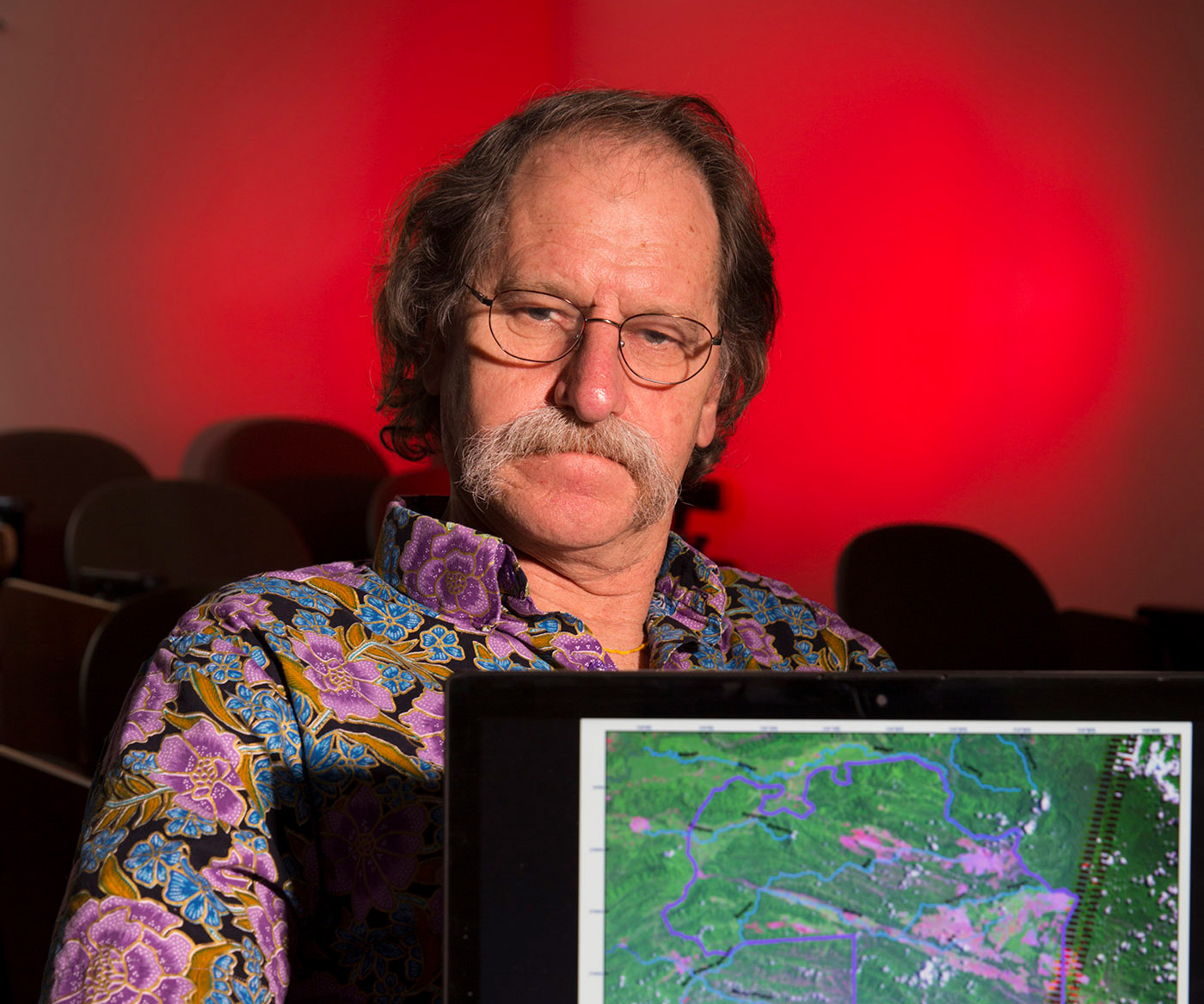
The court case was one part of a much larger career.
The son of a Navy chaplain, Brosius grew up across California, Guam, and the Philippines before completing degrees at California Lutheran, the University of Hawai‘i, and the University of Michigan. He went on to spend the core of his academic career at the University of Georgia, where he became a Distinguished Research Professor and founded the Center for Integrative Conservation Research.
At Georgia, his work reflected the institutional frictions he had witnessed in Borneo. Rather than treating conservation as a purely technical exercise in setting aside acreage or counting wildlife, Brosius focused on governance, power dynamics, and the friction that occurs when global conservation priorities diverge from local livelihoods. Through the MacArthur Foundation’s Advancing Conservation in a Social Context initiative, he built an interdisciplinary program that pushed anthropologists, ecologists, geographers, and foresters out of their respective silos.
Former student Asif Sandeelo recalled him as a mentor who listened carefully to differing viewpoints, guiding student field research and helping secure key grants from the National Science Foundation and Wenner-Gren Foundation.
His interests ranged well beyond Borneo. With his wife, Sarah Lynne Hitchner, he studied tourism and development in Bali, including opposition to a large reclamation project. A lifelong surfer, he also led a University of Georgia program on surfing and sustainability in Costa Rica and studied the effects of tourism development on coastal communities.
Yet Sarawak remained a key part of his life. The primary dipterocarp forests he first walked in the 1980s were largely stripped by successive logging cycles, then cleared for oil palm and timber plantations or inundated by hydroelectric dams. Even with legal breakthroughs, customary land claims across the interior remained contested.
In the summer before he died, Brosius returned to Sarawak, spending several weeks in Gunung Mulu National Park mapping ancestral areas alongside Penan families, just as he had forty years earlier.
