
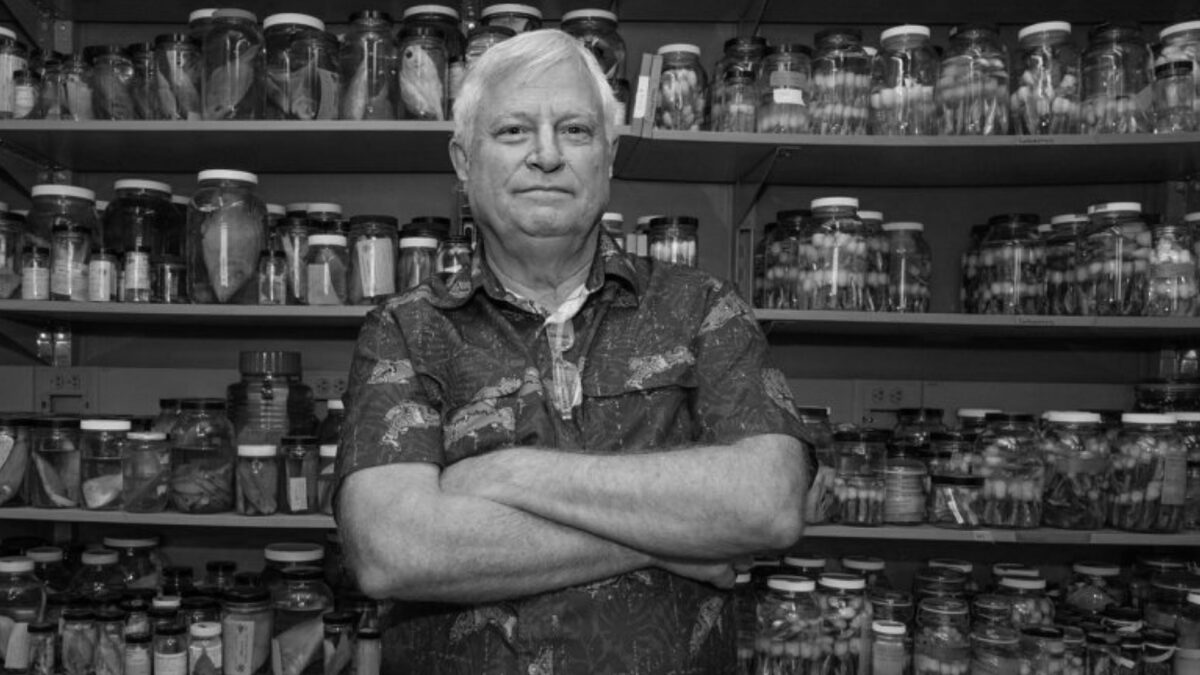
By some accounts, in the Philippine reefs of the 1970s, large groupers appeared every 50 feet or so. Some seemed as large as Volkswagen Beetles. Around them were snappers, fusiliers, wrasses, turtles, and corals, along with fish whose identities were still uncertain.
Kent E. Carpenter arrived in the Philippines at 22, soon after graduating from the Florida Institute of Technology. The Peace Corps assigned him to the Philippine Bureau of Fisheries and Aquatic Resources and put him in charge of coral-reef research. He later called it “the best job there ever was or ever will be in the Peace Corps.” The assignment shaped the rest of his career. Carpenter died in Sibulan, Negros Oriental, on July 12th, aged 73. He was shot at his home, in a killing that remained under investigation.
After earning a doctorate in zoology at the University of Hawaii, he joined Old Dominion University in Virginia, where he became a professor and Eminent Scholar. He studied fish systematics, biogeography, population genetics, and conservation.
His best-known finding began with distribution records for 2,983 marine species. Working with Victor Springer, he mapped their ranges across the Indo-Malay-Philippine region. The highest concentration appeared in the central Philippines, especially around the Verde Island Passage. “I fell off my chair—literally—when I saw that,” he said. He called it the “Center of the Center” of marine shore-fish biodiversity.
Carpenter combined traditional taxonomy with genetics. He compared recent Philippine fish tissue with samples collected in 1908 and found signs of reduced genetic diversity after a century of fishing pressure and habitat damage. In Vietnam, he studied how dams disrupted fish movements in the Mekong basin.
He also worked with the UN Food and Agriculture Organisation and managed the IUCN’s Global Marine Species Assessment. In the South China Sea arbitration, he gave evidence on reef damage caused by dredging.
Students remained central to his work. He spoke Tagalog, played bass guitar in rock bands, and blamed damaged hearing for his difficulty with tonal languages.
In June 2026, his name appeared on a new survey of Tubbataha Reefs. The researchers recorded 534 species in the remote no-take reserve. More than 50 years after his first Philippine assignment, Kent Carpenter was still counting fish.
Kent Carpenter spent half a century counting the life of Philippine reefs
