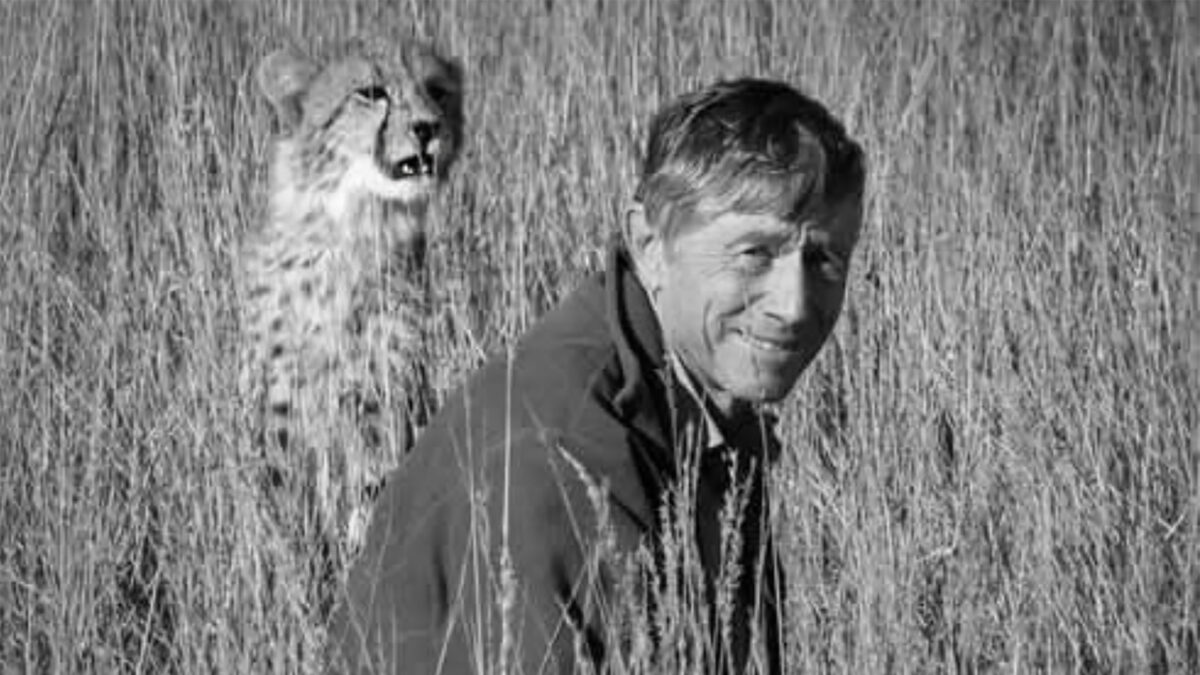
Gus Mills spent a lifetime studying Africa’s carnivores
On visits to Kruger National Park, children were awoken by Gus Mills at midnight to look for bushbabies and again at five in the morning to search for big cats. Wildlife kept inconvenient hours, and he expected his companions to adjust.
Michael “Gus” Mills, who died on July 13, spent more than 40 years studying Africa’s large carnivores, especially hyenas, wild dogs, and cheetahs. He published more than 150 scientific papers, chapters, and reports, advised conservation bodies, and trained younger researchers. Much of the work involved sitting in a vehicle on a sandy track beside an animal that might sleep for most of the day.
At school, he had seemed an unlikely scientist. He called himself a “very bad student” and failed South Africa’s high-school leaving examination. After passing on a second attempt, he joked that he had earned an MA: “Matric Again.” A visit to Kruger in 1954, when he was eight, had already pointed him toward field biology.
In 1972, he and his wife Margie moved into a caravan in the Kalahari to study brown and spotted hyenas. They stayed for 12 years. Hyenas suited him: complicated animals burdened by crude reputations. When the BBC described them as “ferocious scavengers,” he objected until the wording became “formidable hunters.”
Later, in Kruger, he studied lions, cheetahs, and wild dogs, and recruited visitors to submit photographs for population surveys. He also challenged the emphasis park managers placed on animal counts, arguing that numbers alone revealed little about whether an ecosystem was functioning.
After retiring from SANParks, he returned to the Kalahari for a six-year cheetah study. He and Margie identified 176 animals and spent about 7,000 hours watching them, roughly 5,000 of those while the cats rested. They recorded 539 kills, collected hairs with tweezers from resting sites, endured eight tire punctures in one day, and followed one cheetah, Lisette, for more than six years.
Margie described her husband as a “cheerful pessimist.” His concern about ecological decline kept him engaged in research and conservation after formal retirement. He supervised graduate students, worked with San trackers, and continued taking on physically demanding journeys. In 2021, in his mid-70s, he became the oldest man to reach the 5,100-m summit in Uganda’s Rwenzori Mountains.
The Kalahari remained what he called the “home of his heart.” It offered the conditions in which he had learned his craft: long distances, few distractions, and animals that revealed themselves slowly. A cheetah might spend hours under a tree before rising to hunt. A hyena’s tracks might continue over several dunes. Mills was prepared to stay with either for as long as the work required.
