Categories
Random pieces

When elephants go, so do ebony trees

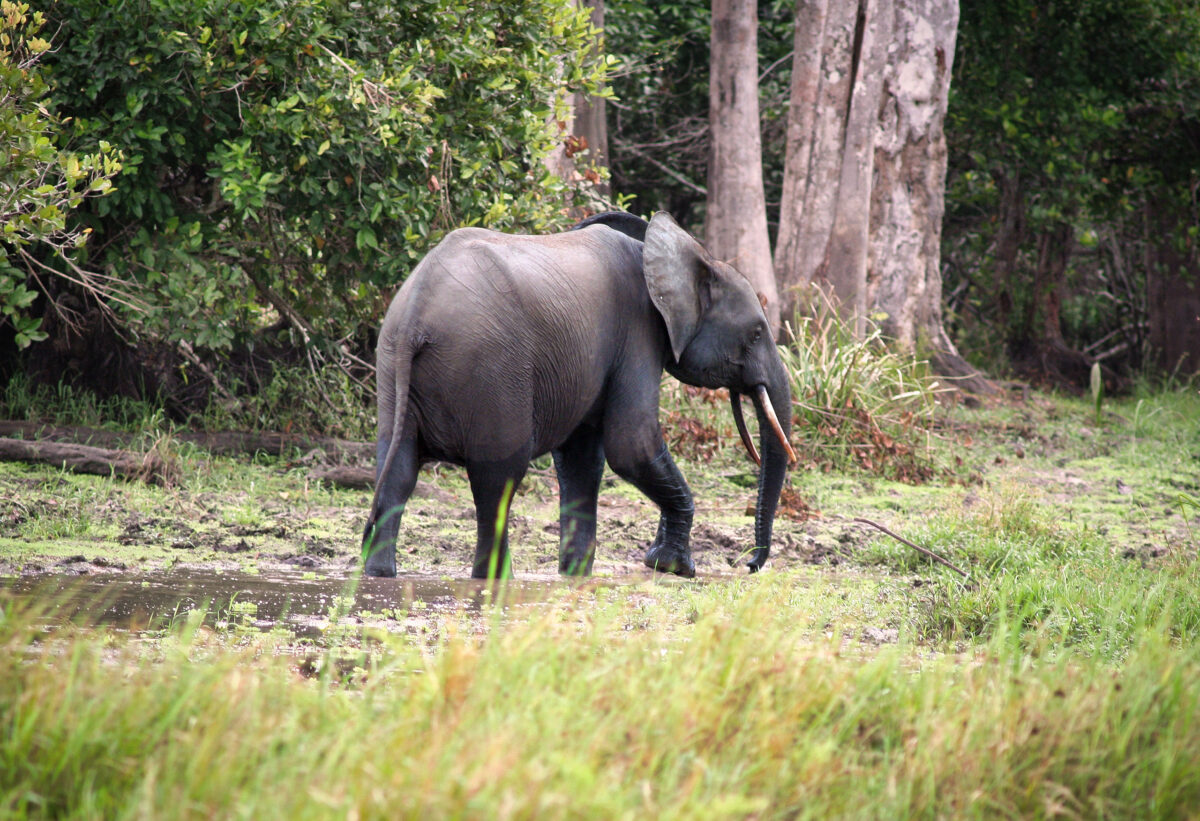
In 2017, when Vincent Deblauwe joined the Congo Basin Institute in Cameroon to study African ebony, he soon realized the fate of the tree lay with another species. Around campfires and during treks, the Indigenous Baka people told him that the forest elephant was key to ebony’s survival. His fieldwork confirmed their knowledge. In patches [Continue reading]
Categories
Random pieces

Deforestation is killing people by raising local temperatures

For decades the case for saving tropical forests has been cast in terms of carbon. Trees sequester vast quantities of it; razing them pumps more into the air. But new research reminds us that the destruction of rainforests has consequences that arrive long before the carbon accounting is tallied: It makes people hotter, sometimes lethally [Continue reading]

Categories
Random pieces

As seed dispersers disappear, forests are losing their future

In the vast machinery of life, few roles are as humble—and as irreplaceable—as those played by the animals that disperse seeds. Their work begins with the unheralded act of consumption: a monkey swallows a fig, a tapir noses through fallen fruit, a bird flies off with a berry in its beak. What follows is a [Continue reading]

Categories
Random pieces

The slow demise of turtles and tortoises

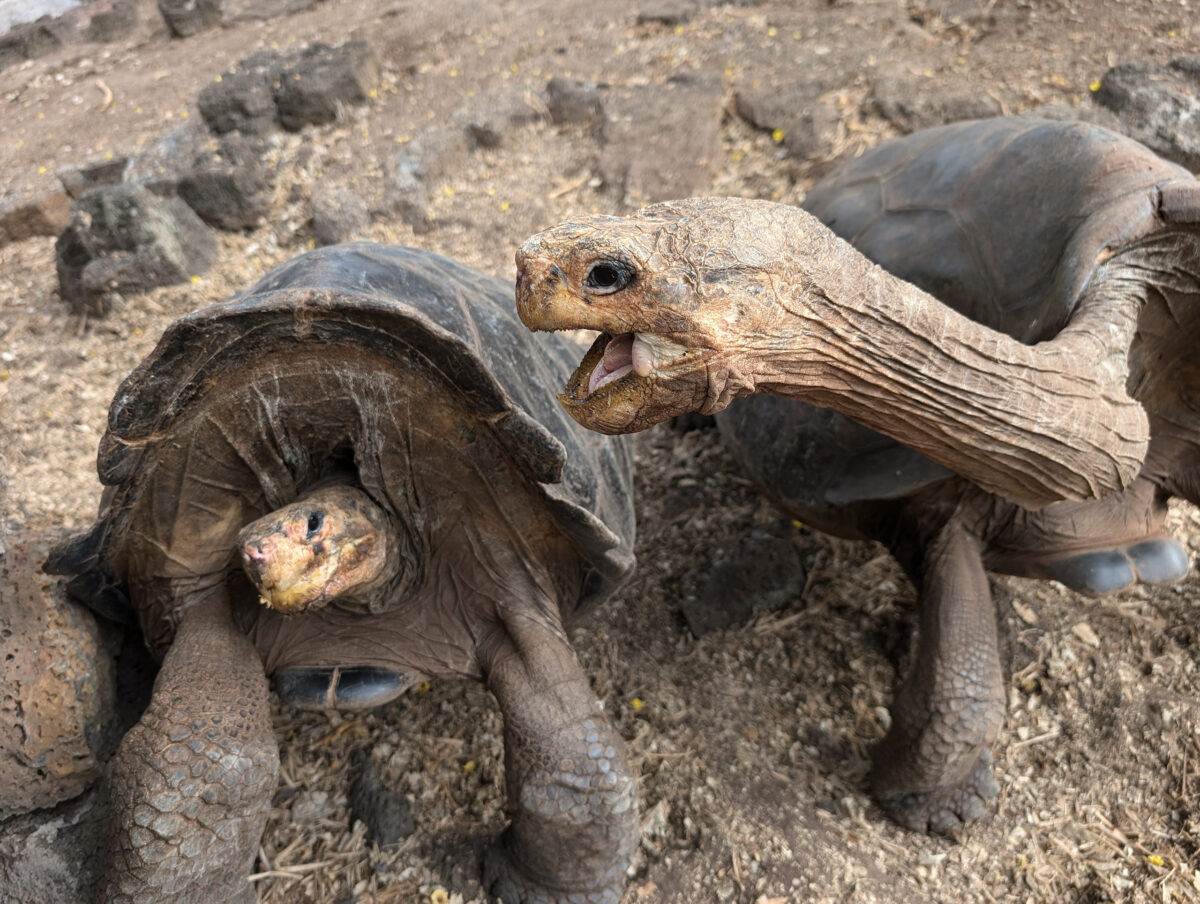
Turtles and tortoises have outlived dinosaurs, endured ice ages, and survived the shuffling of continents. Yet despite their evolutionary stamina, these ancient mariners and land-dwellers now find themselves in peril. A sweeping global assessment published in Nature Communications offers the most comprehensive analysis to date of extinction risks facing the order Testudines—and the results are [Continue reading]

Categories
Random pieces

Cactopinus rhettbutleri: A beetle named in my honor, with benefits for a forest in Ethiopia

Ten years ago, I received the unusual honor of having a beetle named after me. The christening took place in a manner befitting the age: through an online auction. Biologist Meg Lowman had secured naming rights to a tiny rhinoceros bark beetle endemic to the cactus-studded valleys of Oaxaca, Mexico. She placed the winning bid [Continue reading]

Categories
Random pieces

Rethinking the narrative: Big environmental change needs smaller stories of success

For decades, conservationist Enrique Ortiz has worked to protect some of the world’s most vital ecosystems. But in his recent commentary for Mongabay, he voiced a stark truth that many in conservation rarely say aloud: Environmental messaging is failing to inspire enough people to act. The facts are known, yet they rarely change minds. To [Continue reading]

Categories
Random pieces

Why “Wildcats” and “Wild Cats” are not the same—and why it matters

In a brief but clarifying academic note, conservationists Jim Sanderson and Alex Sliwa draw a sharp linguistic line between “wildcats” and “wild cats”—a distinction with real ecological significance.  Wildcats, they explain, refer specifically to three species in the genus Felis: the African wildcat (F. lybica), the European wildcat (F. silvestris), and the Chinese steppe cat [Continue reading]

Categories
Random pieces

The pangolin’s lament—and its chance at redemption

Until recently, the pangolin’s fate had mostly unfolded in silence. Hunted for its scales, consumed in markets, and shipped across borders with bureaucratic indifference, it is the most trafficked mammal in the world—more so than elephants or tigers. Yet its name rarely echoes beyond the corridors of conservation circles. With its shy demeanor and prehistoric [Continue reading]

Categories
Random pieces

How a large flightless parrot rebounded from the verge of extinction

To mark World Nature Conservation Day, here’s a look at the kākāpō’s recovery.  In the mid-1990s, the kākāpō seemed destined for extinction. Only 51 individuals of the flightless, nocturnal parrot remained, all of them descended from a shrinking gene pool and spread across remote corners of New Zealand. A victim of its own evolutionary success, [Continue reading]

Categories
Random pieces

How to improve recycling rates. Offer a lottery rather than a refund.

A guaranteed 10-cent refund for every returned beverage container may be rational, but it is not thrilling. In British Columbia and Alberta, where bottle deposit refund systems are already well-established, researchers wondered whether adding a little uncertainty—specifically, a 0.01% chance of winning $1,000 per bottle—might nudge people to recycle more. It turns out, it does. [Continue reading]

Categories
Random pieces

Sea otters’ comeback is hurting wolves

When wolves on Pleasant Island, off Alaska’s southeastern coast, arrived in 2013, they quickly exhausted the local deer population. Rather than return to the mainland, they adapted. Their new prey: sea otters. Up to 70% of their diet now consists of the charismatic marine mammals, according to new research. But this dietary shift has come [Continue reading]

Categories
Random pieces

A world worth inheriting

I was recently asked to “write a letter to the future” for an art exhibition created by Ann Hamilton. Here’s the letter. Dear Future, I don’t know if you’ll read this from a lush and living world, or from the dry husk of one we failed to protect. But I’m writing from the in-between—a moment [Continue reading]

Categories
Random pieces

Conservation’s mental health epidemic

Amid the calls of gibbons and the whir of drones scanning forest canopies, a quieter crisis is unfolding within the ranks of those trying to save nature. Conservationists, often seen as tireless stewards of the planet’s dwindling biodiversity, are burning out. In some cases, they are breaking down. And with disturbing regularity, social media feeds [Continue reading]

Categories
Random pieces

What’s holding back natural climate solutions?

Natural climate solutions (NCS)—from reforestation and agroforestry to wetland restoration—have long been championed as low-cost, high-benefit pathways for reducing greenhouse gases. In theory, they could provide over a third of the climate mitigation needed by 2030 to stay under 2°C of warming. But in practice, progress is stalling. A sweeping new PNAS Nexus study, led [Continue reading]

Categories
Random pieces

Young secondary forests may be the planet’s most overlooked carbon sink

As governments and corporations scramble to meet climate pledges, the search for reliable and scalable carbon removal strategies has turned increasingly toward forests. But while tree planting captures public imagination, a new study suggests a simpler, less costly strategy may deliver better results: Protecting young secondary forests already on the landscape. In a paper published [Continue reading]

Categories
Random pieces

For World Rainforest Day: A Look at the State of Tropical Forests

June 22 marks World Rainforest Day, launched in 2017 by Rainforest Partnership to highlight the critical role of tropical forests. These ecosystems stabilize the climate, regulate rainfall, store vast amounts of carbon, and support most of the world’s terrestrial biodiversity. Yet despite their importance, 2024 proved to be a devastating year. Fires ravaged millions of [Continue reading]

Categories
Obituaries and tributes Random pieces

When an aquarium is more than a box

Takashi Amano, master of the underwater landscape, died ten years ago this August. A new photo exhibition honors his legacy. NOTE: The first time I saw photographs of Takashi Amano’s aquariums, it changed everything. The glass walls disappeared. Inside was not a tank, but a window into a living world—verdant, balanced, utterly alive. It was [Continue reading]

Categories
Random pieces

An inferno in the Amazon in 2024 undermined progress in saving Earth’s largest rainforest

Fires raged across the Amazon rainforest, annihilating more than 4.6 million hectares of primary tropical forest—the most biodiverse and carbon-dense type of forest on Earth. That loss, larger than the size of Denmark, was more than twice the annual average between 2014 and 2023, according to data released last month by the World Resources Institute’s [Continue reading]