
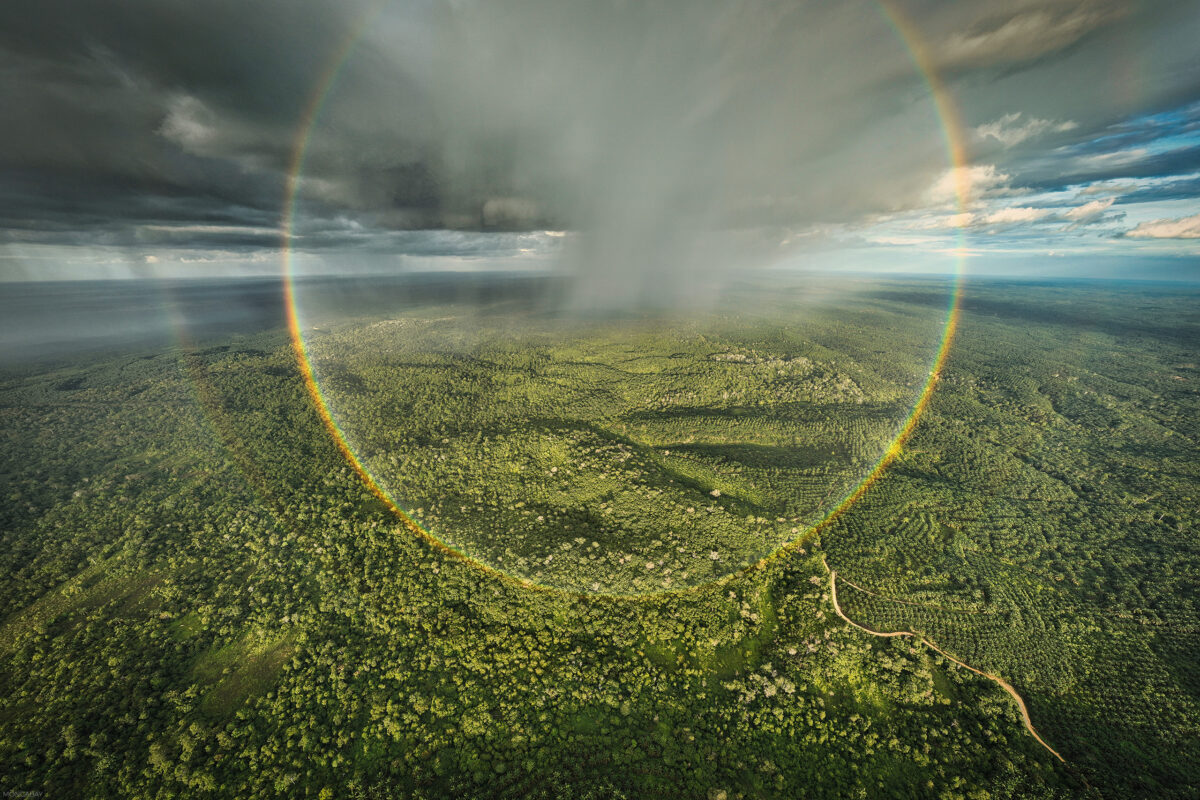
I was recently asked to “write a letter to the future” for an art exhibition created by Ann Hamilton. Here’s the letter.
Dear Future,
I don’t know if you’ll read this from a lush and living world, or from the dry husk of one we failed to protect. But I’m writing from the in-between—a moment when the outcome is still uncertain.
Today, we live in a time of unraveling. Forests that once breathed life into the planet are felled in hours. In the Caribbean, I watched coral fade from fluorescent to bone-white in a matter of months. We’re not just losing species: We’re losing stories, places, relationships. Every extinction tugs at the threads that hold the world together.
I want you to know that we saw it happening. We measured it. We filed reports, gave TED talks, and made documentaries. We mourned each loss—sometimes genuinely, sometimes just online. And still, we carried on—digging, burning, buying, flying—faster than the Earth could mend.
I have young children. I look into their eyes and wonder what kind of world they’ll inherit. I wonder if their kids, or their grandkids, will ever have the chance to stand in the dense, damp stillness of a place like Andasibe, the air thick with the scent of moss and orchids, their feet sinking slightly into the soft, leaf-littered floor. Will they feel that shiver—that primal recognition—as the indri’s haunting call echoes through the canopy, deep and mournful, bouncing between trunks like a voice from another time? Will they know what it’s like to race barefoot through a backyard at dusk as fireflies flitter around them like drifting embers? Will they feel the thrill of swimming alongside a whale shark in the Sea of Cortez awed by the grace and sheer enormity of a creature older than memory?
And yet there’s still breath in the forest. Still shadows moving in the sea. Still time, though it’s thinner now.
In the Philippines, neighbors are replanting mangroves by hand. In Kenya, farmers are bringing back drought-tolerant millet their grandparents used to grow. Scientists are trying to stitch coral back to reef. Journalists are still out there, chasing the truth and telling stories that spark change. Kids are marching—sometimes scared, sometimes fierce—for a future they can’t yet see.
If you are reading this in a world where the rain still falls clean, where frogs still sing at night, where elephants still walk under stars, know that it wasn’t by accident. Know that there were people, ordinary people, who didn’t give up. Who chose to protect what they loved, even when the odds were long. Who acted not out of certainty, but out of love. Not because they believed it would work, but because not trying felt worse.
Maybe it was enough. I hope it was.
Carry that love forward, if you can. Remember what we lost, and protect what remains, not out of obligation, but out of awe. Because the future isn’t fixed. It’s shaped, every day, by what we choose.
Even now.
With hope,
Rhett
