
Turtles and tortoises have outlived dinosaurs, endured ice ages, and survived the shuffling of continents. Yet despite their evolutionary stamina, these ancient mariners and land-dwellers now find themselves in peril. A sweeping global assessment published in Nature Communications offers the most comprehensive analysis to date of extinction risks facing the order Testudines—and the results are grim.
Over half of the 378 evaluated species are either threatened or already extinct. Particularly imperiled are those with large body sizes, narrow geographical ranges, or high ecological distinctiveness. The Indomalayan region, home to species such as the Asian giant softshell turtle and the Assam box turtle, has emerged as a hotspot of chelonian crisis. Entire families, including Trionychidae (softshell turtles) and Geoemydidae (Asian river turtles), are on the brink.
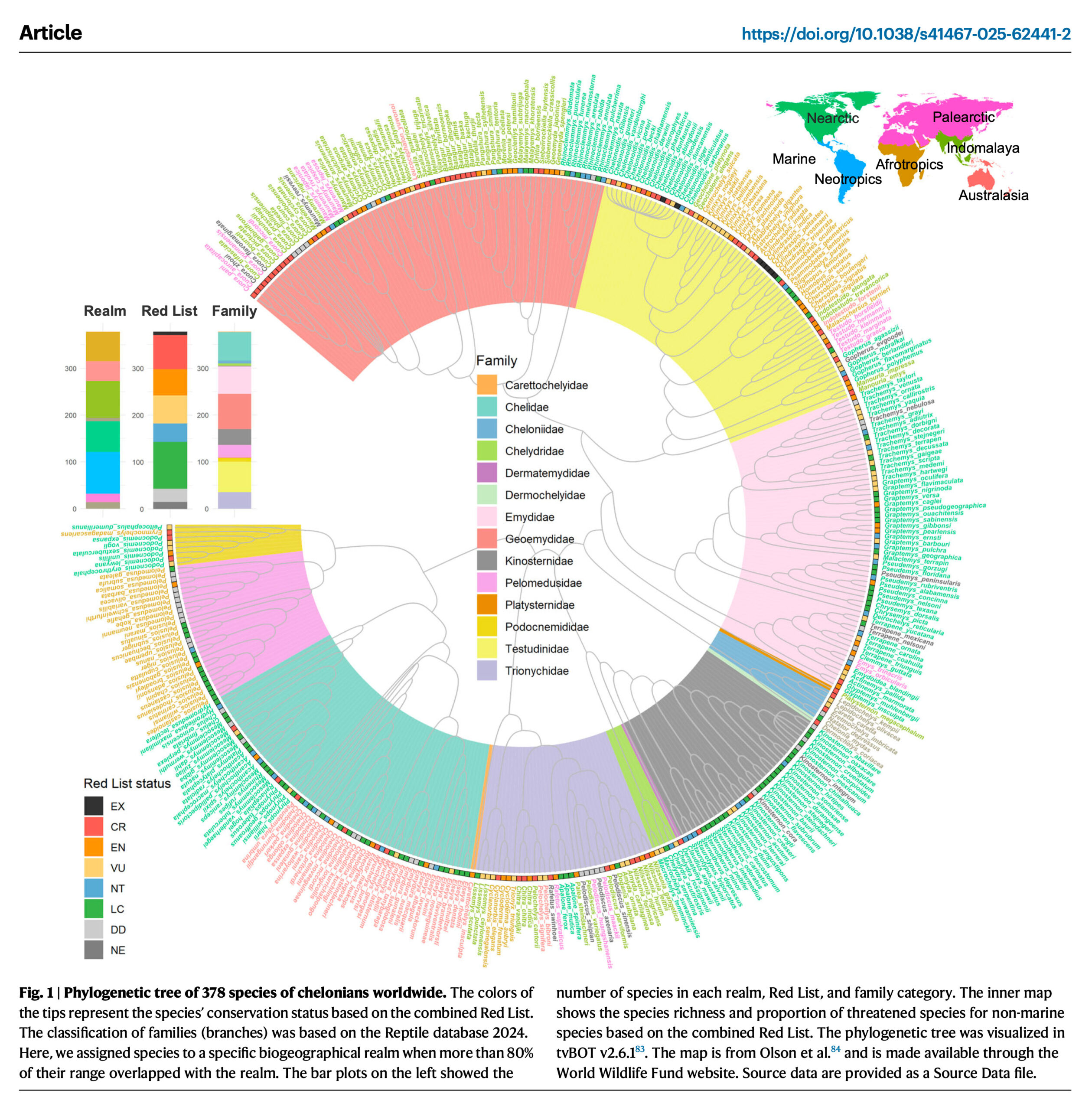 The study doesn’t stop at diagnosis. Using models that incorporate ecological traits, geographical distributions, and anthropogenic pressures, researchers projected extinction risk for 43 data-deficient species. Nearly one in five of these is likely threatened, including the Sicilian pond turtle and the flatback turtle, which nests exclusively on northern Australian shores.
But perhaps most alarming is the study’s conclusion that turtles’ evolutionary adaptations are unfolding far too slowly to keep pace with today’s environmental shifts. Traits such as body size or reproductive lifespan evolve over millennia. Meanwhile, climate change, habitat degradation, and human expansion are advancing at a speed that outstrips turtles’ ability to adapt by several orders of magnitude.
There are glimmers of hope. Some species are demonstrating behavioral plasticity, such as shifting nest timing or location. Yet the broader picture remains one of biological inertia clashing with planetary acceleration. For creatures that once epitomized resilience, the Anthropocene may prove too swift and too brutal a test.
