Categories
Commentary and analysis

Decisions today that will define 2050

In 2050, the world will not feel new. It will feel like the result of habits long set. The children born today will be adults then, shaped more by decisions made before they could vote, work, or speak with authority than by the promises offered once they could speak for themselves.  The future will not [Continue reading]

Categories
Random pieces

Conservation’s colonial inheritance: What efforts to protect nature still struggle to confront

Conservation is often framed as a technical exercise: how much land to protect, which species to prioritize, what policies deliver measurable gains. A recent paper in Nature, A Framework for Addressing Racial and Related Inequities in Conservation, argues that this framing overlooks a deeper constraint. Many of the field’s most persistent problems, the authors contend, [Continue reading]

Categories
Mongabay journalism

Who gets to decide what counts as science

For most of Peru’s scientific history, Indigenous knowledge has existed outside the formal record. It shaped how forests were used, how species were managed, and how risk was understood, but rarely appeared in journals or policy. The boundary is shifting. One of the researchers bringing community knowledge into the scientific literature is Richar Antonio Demetrio, [Continue reading]

Categories
Mongabay journalism

Animals doing unexpected things

Every year brings its small revisions to what humans think they know about animals. 2025 was no exception. Here are some examples compiled by Shreya Dasgupta. Waterfall climbing catfish In Brazil, thousands of bumblebee catfish were seen climbing waterfalls. The fish gathered at the base of cascades on the Aquidauana River, then edged their way [Continue reading]

Categories
Random pieces

When field science becomes dangerous: The disappearance of a Mexican biologist

In the mountains of central Veracruz, scientific work is rarely abstract. It means walking narrow paths through cloud forest, speaking patiently with communities, and learning to read landscapes that yield information slowly. It also means accepting risk as a condition of knowledge. Field research unfolds in places where the state is often distant and authority [Continue reading]

Categories
Random pieces

Craig, a survivor of Africa’s ivory age

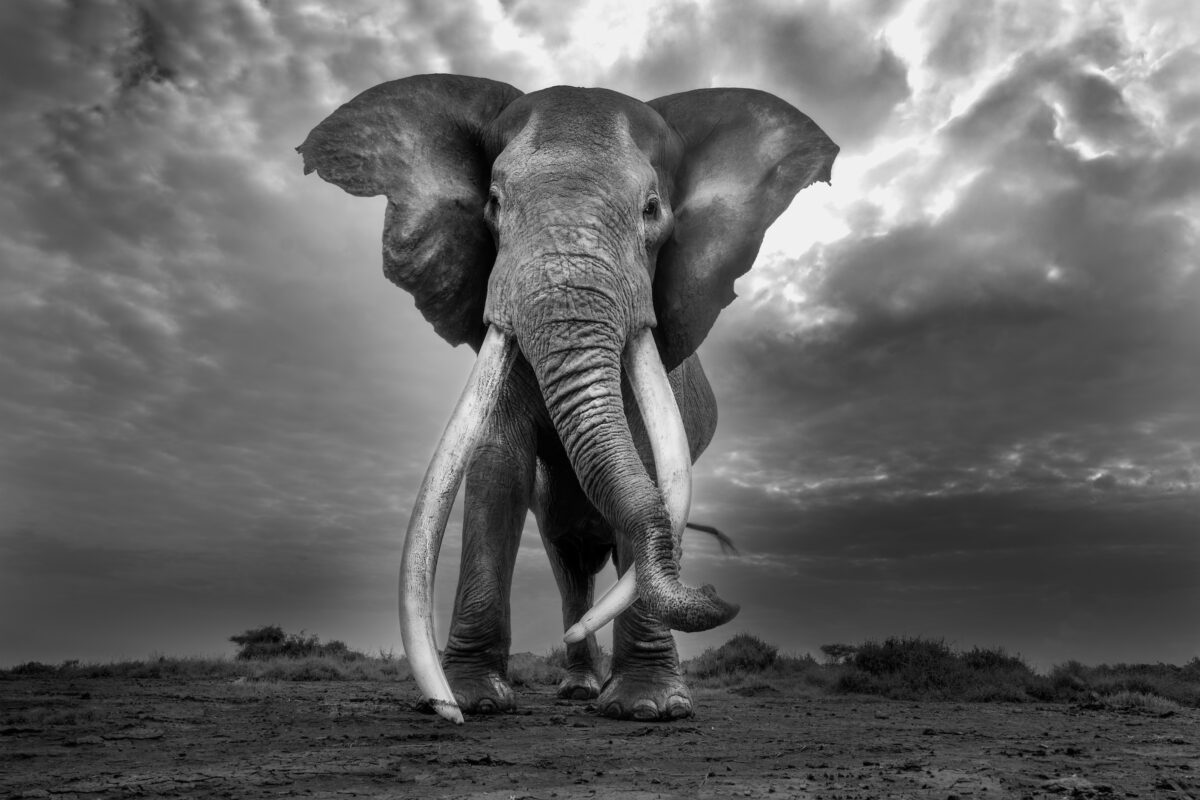
The death of a well-known wild animal is an odd kind of news. It is intimate, because so many people feel they have met the creature through photographs and video. It is also impersonal, because the animal has no public life beyond what humans project onto it. For elephants, that tension is sharpened by history. [Continue reading]

Categories
Mongabay Features

What we lost and what we found in 2025

Extinction is rarely a moment. It is a process that unfolds offstage, marked by missed sightings, thinning records, and the slow reassignment of hope to footnotes. Discovery, too, is rarely a moment. It is a process of comparison, argument, and waiting—years spent persuading other experts that what you are seeing is, in fact, new. A [Continue reading]

Categories
Obituaries and tributes

Tatiana Schlossberg, environmental journalist writing with cancer

She wrote about damage that accumulated slowly, in places most people did not look, and about the systems that allowed it to be ignored. When her own life was overtaken by illness, she approached that, too, as a problem to be understood rather than transcended. For much of her career she worked as an environmental [Continue reading]

Categories
Obituaries and tributes

Andy Mahler, a persistent defender of public forests

In the late 20th century, forest conservation in the eastern United States was rarely a matter of sweeping victories or clean resolutions. It was a practice shaped by hearings that dragged on, injunctions that arrived too late, and landscapes divided among agencies with overlapping mandates and uneven resolve. The work tended to fall to people [Continue reading]

Categories
Mongabay journalism

Species discovered in 2025

Every year, science adds names to the living world. The tally is never small. Hundreds of species are formally described, often after years of slow, meticulous work, and often long after the organisms themselves were first seen.  Biologists estimate that perhaps only a tenth to a fifth of Earth’s species have been documented. Even among [Continue reading]

Categories
Obituaries and tributes

George Teariki-Mataki Mateariki, the Birdman of Atiu

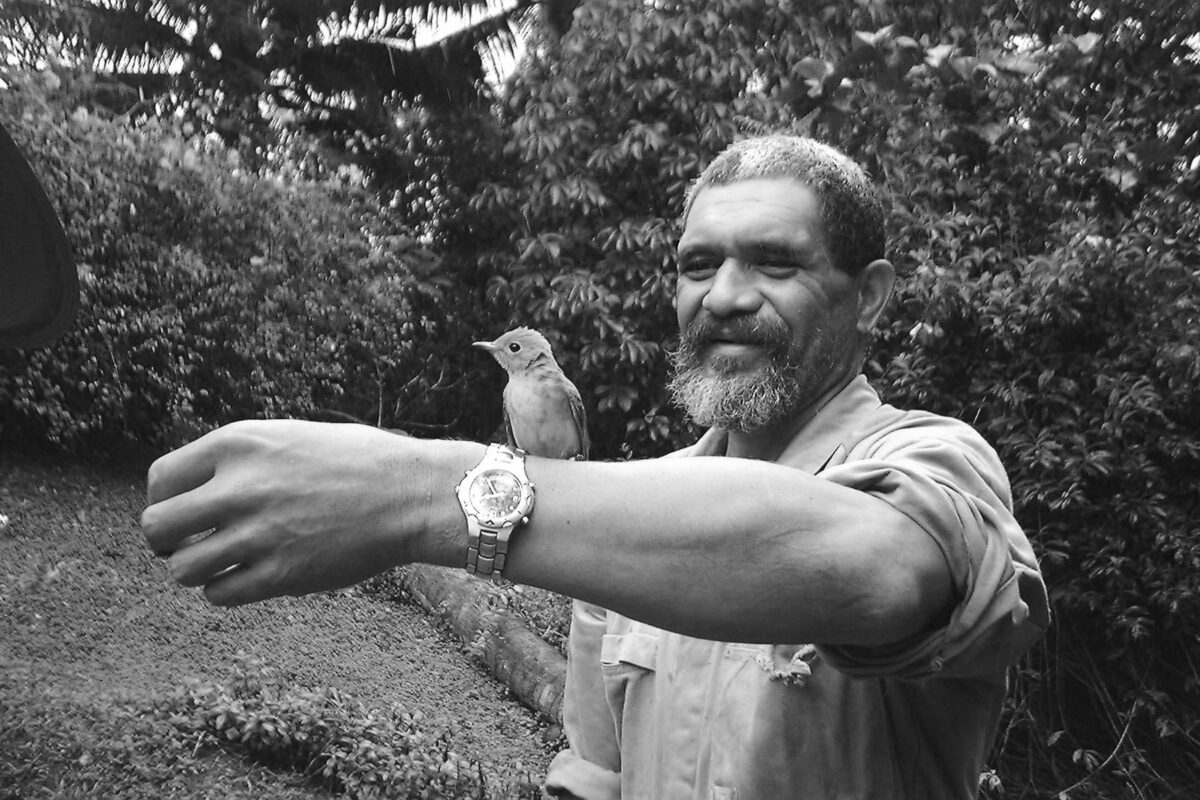
In small island states, conservation has often depended less on formal institutions than on vigilance: watching harbors, checking traps, noticing what does not belong. The work is repetitive, practical, and easily overlooked. It rarely comes with titles or funding cycles that last longer than a season. Yet in places where a single invasive species can [Continue reading]

Categories
Obituaries and tributes

Brigitte Bardot, film star turned animal and wildlife activist, has died, aged 91

In the second half of the 20th century, animal protection was often treated in public debate as a minor cause, sentimental at best and unserious at worst. Those who pressed the issue were commonly dismissed as eccentrics or moral scolds, their concerns indulged but not absorbed. One figure helped shift that balance by refusing to [Continue reading]

Categories
Mongabay journalism

Species confirmed extinct in 2025

Extinction is rarely a moment. It is a process that unfolds offstage, marked by missed sightings, thinning records, and the slow reassignment of hope to footnotes. This year, a small group of species crossed a final bureaucratic threshold. Following new assessments, they were formally listed as extinct on the IUCN Red List. For science, the [Continue reading]

Categories
Mongabay Features

2025: A year of mixed signals for the world’s tropical forests

On Friday, I published my annual “Year in Rainforests” on Mongabay. The process is always taxing and every year I swear will be the last. Here’s a summary of the piece.  2025 was a mixed year for the world’s tropical rainforests. In several countries, deforestation declined, sometimes sharply. At the same time, other forms of [Continue reading]

Categories
Obituaries and tributes

Elizabeth Erasito, custodian of Fiji’s parks and places, aged 57

The work of conservation in small island states is rarely abstract. It is shaped by land that is limited, institutions that are thinly resourced, and pressures that arrive from far beyond national borders. Decisions about forests, rivers, reefs, and historic sites are often framed as technical choices, but they are more often political ones, balancing [Continue reading]

Categories
Obituaries and tributes

Kristina Gjerde, mother of the high seas, has died. She was 68.

Half the planet lies outside any country’s border. In those waters, rules have long been thinner than the myths: freedom to fish meant freedom to take; “out of sight” became “out of mind.” The deep ocean and the high seas were treated as a backdrop to coastal concerns, even as they stored carbon and heat, [Continue reading]

Categories
Obituaries and tributes

Joann Andrews, a pragmatist for nature in southern Mexico

Conservation is often framed as romance or emergency. In practice it is closer to logistics: permits, budgets, awkward meetings, long drives, and the slow work of persuading people who would rather be left alone. Where the state is thin and land already claimed, success depends less on theory than on getting institutions to behave tolerably [Continue reading]

Categories
Obituaries and tributes

Clark Lungren, a conservationist in Burkina Faso who trusted local governance

The history of conservation in West Africa is often written as a record of loss: wildlife depleted, institutions stretched thin, and projects undone by conflict or poverty. Less often does it include examples of recovery that endure. When such cases do exist, they tend to rest on compromises that look unorthodox on paper but make [Continue reading]

Categories
Obituaries and tributes

Jay M. Savage, witness to extinction, 97

In the late 1980s, something began to go wrong in places that were supposed to be safe. Protected cloud forests, buffered from chainsaws and bulldozers, started losing animals that had persisted through far rougher times. Amphibians—often abundant, often overlooked—were vanishing in ways that did not fit familiar explanations. Field biologists, trained to distrust drama, found [Continue reading]

Categories
Random pieces

15 emerging issues that could reshape conservation

Conservation debates are usually framed by damage already visible. Forests are cleared, fisheries decline, protected areas invaded, and budgets cut. Less attention is paid to developments that have not yet hardened into crises, partly because they are unfamiliar and partly because they fall between established fields. A recent horizon scan led by William J. Sutherland [Continue reading]

Categories
Obituaries and tributes

Joanna Macy turned despair into agency

For much of the late 20th century, environmental writing oscillated between alarm and reassurance. One strand emphasized catastrophe; another urged optimism. A smaller, more demanding tradition insisted on neither denial nor consolation, but attention. It asked what it meant to remain fully present to ecological loss without turning away or hardening into fatalism. That question [Continue reading]

Categories
Obituaries and tributes

Stuart Brooks, advocate for peatlands

For much of the late 20th and early 21st centuries, peatlands sat awkwardly at the edge of public consciousness. Neither conventionally scenic nor easily commodified, they were drained, burned, planted over, or dismissed as wasteland. Only gradually did they come to be understood as systems of consequence: for biodiversity, for water, and, increasingly, for climate. [Continue reading]

Categories
Obituaries and tributes

Neddy Mulimo, a defender of rangers as well as wildlife

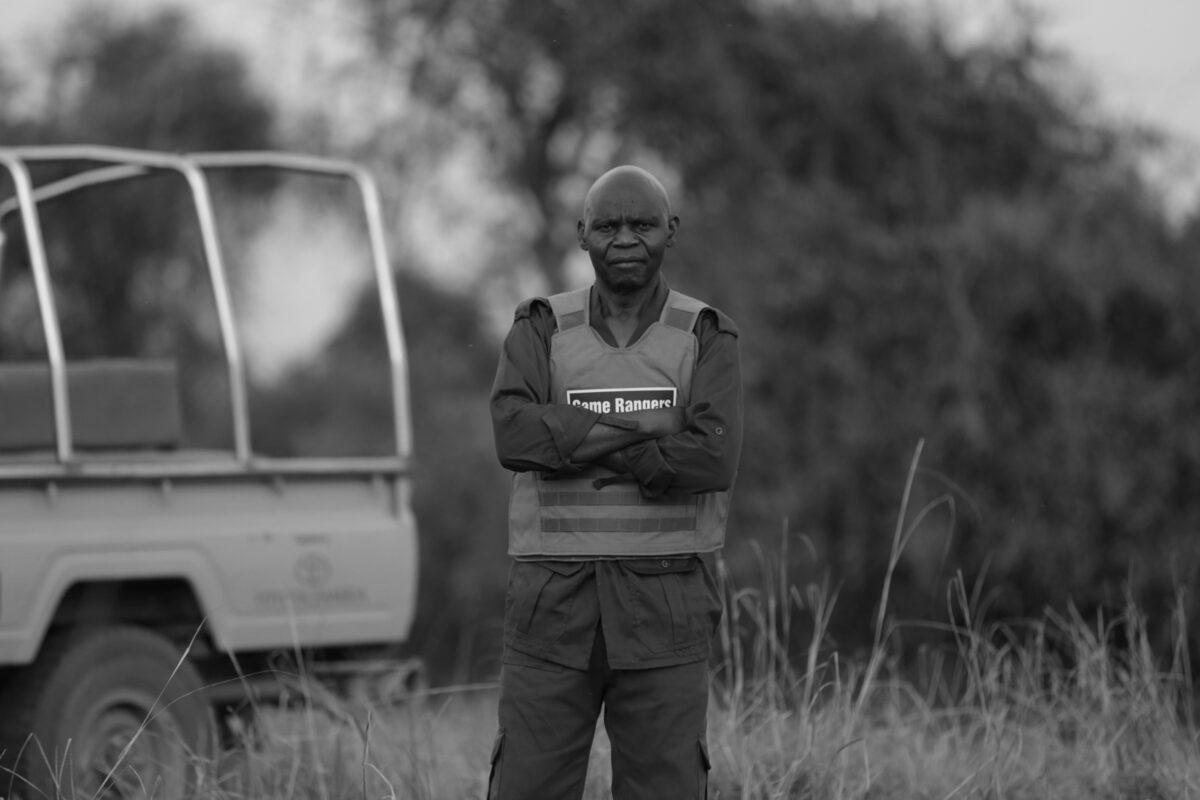
In much of Africa, conservation is discussed in the language of landscapes and species: elephant corridors, lechwe floodplains, and the slow arithmetic of births and deaths. On the ground, it is also a labor question. The work is done by people who walk long hours, sleep badly, work in dangerous circumstances, and carry responsibility that [Continue reading]

Categories
Obituaries and tributes

William Bond, defender of grasslands

In recent years, one of the loudest ideas in environmental policy has been that trees are the planet’s universal remedy. Plant enough of them, in enough places, and carbon will be soaked up, water will return, and biodiversity will rebound. The proposition is tidy, optimistic, and easily communicated. It is also, in many landscapes, wrong. [Continue reading]
Categories
Obituaries and tributes

Tell Hicks, the naturalist who painted reptiles

For much of the late 20th century, reptiles occupied an awkward place in the public imagination. They were admired by specialists, feared or misunderstood by many others, and rarely treated with the same aesthetic seriousness afforded to birds or mammals. Field guides existed, but art that lingered on texture, posture, and individuality was scarce. The [Continue reading]