
In recent years, one of the loudest ideas in environmental policy has been that trees are the planet’s universal remedy. Plant enough of them, in enough places, and carbon will be soaked up, water will return, and biodiversity will rebound. The proposition is tidy, optimistic, and easily communicated. It is also, in many landscapes, wrong.
The resistance to this way of thinking did not come from campaigners or contrarians, but from ecology. Over decades, evidence accumulated that vast parts of the world long assumed to be degraded forests were neither degraded nor forests at all. They were ancient grasslands and savannas, shaped by fire, herbivores, and time. Treating them as failed woodlands, and covering them with trees, risked destroying the very systems being “restored.”
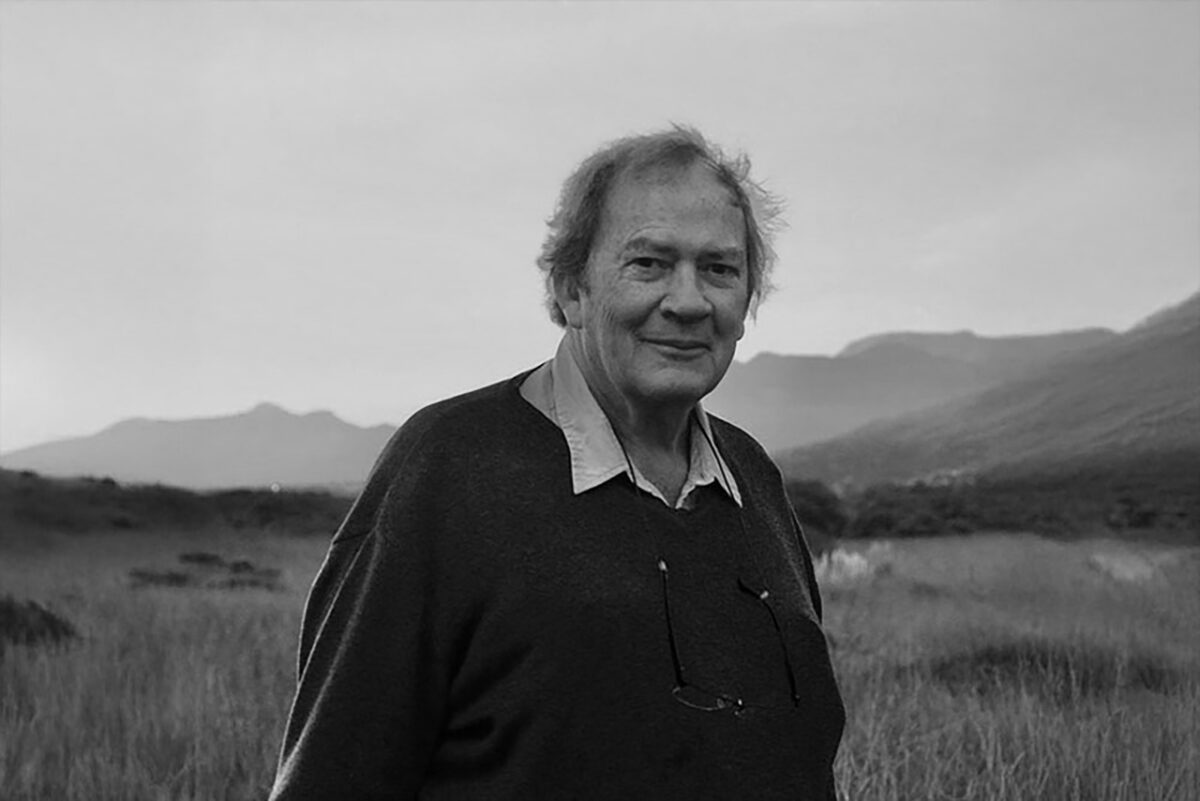
Few scientists did more to clarify this than William Bond.
Bond spent much of his career insisting on an unfashionable idea: that openness mattered. Sunlit systems, he argued, were not empty spaces awaiting trees, but complex ecosystems with their own histories, rules, assemblages, and riches. Grasslands and savannas were not provisional stages on the way to forests. They were alternative outcomes, maintained by processes as fundamental as rainfall or soil.
This view ran against powerful currents. International agencies, governments, philanthropists, and corporations were eager for simple climate solutions, and trees were visible, plantable, and symbolic. Bond did not object to forests. He objected to careless generalization. Where forests were ancient, he believed they should be protected fiercely. Where open ecosystems were ancient, he believed they deserved the same respect.
His arguments were grounded in detail. Fire, he showed, was not merely destructive but formative, clearing space for grasses and wildflowers while suppressing tree seedlings. Large herbivores, browsing and trampling, played a parallel role. Changes in atmospheric carbon dioxide over millions of years helped tip the balance between trees and grasses, altering the structure of whole continents. None of this could be reduced to slogans.
Bond had little patience for environmental claims that ignored scale or context. He was skeptical of assertions that forests produced the planet’s oxygen, pointing out that most atmospheric oxygen was ancient. He challenged the idea that planting trees would reliably bring rain or refill rivers, citing long-running hydrological experiments showing the opposite in many regions. He warned that focusing narrowly on tree carbon ignored the far larger stores locked in soils, especially in peatlands and permafrost.
The tone of his interventions was often dry, occasionally sharp, and deliberately accessible. He favored myth-busting as a method, not to provoke for its own sake, but to slow decisions being made at speed. “Be careful,” was his recurring message, delivered with data rather than drama.
Bond was an emeritus professor at the University of Cape Town and served as chief scientist of South Africa’s Environmental Observation Network. He published hundreds of scientific papers and helped shape a generation of ecologists. Yet his most lasting influence may lie outside academia, in forcing policymakers and conservationists to look more closely at the landscapes they sought to fix.
He disliked the idea that loving nature required loving trees everywhere. Some of the world’s most diverse places, he noted, are open, windy, dry, and flammable. They do not look lush from the air. They reward attention on the ground.
Bond’s work leaves behind an inconvenient lesson for an era of climate urgency: that speed is not a substitute for understanding, and that good intentions, applied without care, can erase ancient worlds as efficiently as neglect.
