
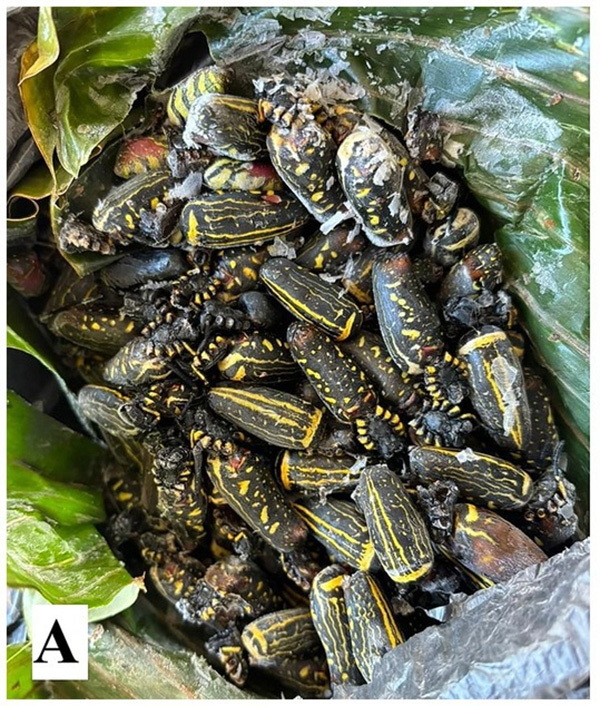
In Nagaland, edible spiders are not a novelty. They are part of a local food tradition. A new study in Frontiers in Sustainable Food Systems documents the consumption of two orb-weaver spiders, Nephila pilipes and Trichonephila clavata, both known in the Lotha Naga language as siyankyü.
The study, based on interviews with 33 people with traditional knowledge, describes a simple preparation. The head and legs are removed, and the spiders are cleaned and cooked with seasoning. Respondents described the result as creamy and nutty. Laboratory analysis found the spiders to be high in protein, with levels above those reported for some commonly eaten insects.
The findings add to a small but growing literature on arachnophagy, the eating of spiders and other arachnids. Although more than 50,000 spider species are known, only a small number are reported as food. Orb-weavers are eaten in several countries, and tarantulas are sold as street food in Cambodia.
The case for spiders as food is not straightforward. They can provide protein and micronutrients, and may be ecologically efficient. Yet many species are hard to farm. They can be territorial, cannibalistic and slow-growing. Wild harvesting also needs care, since spiders help regulate insect populations.
For now, spiders may remain what they already are in Nagaland: a local food with cultural value, with limited prospects as a global protein source.
The full piece: ‘Creamy, nutty’ spiders are protein source for Indigenous Indian tribe
