
In the desert of northern Mexico, near the town of San Fernando in Tamaulipas, there was once a spring so small it barely deserved a name. It lay in the desert like a mirror dropped in the dust — a clear, turquoise eye through which the earth itself seemed to breathe. In that shallow, turquoise [Continue reading]
Author: Rhett Ayers Butler
Rhett Ayers Butler is the Founder and CEO of Mongabay, a non-profit conservation and environmental science platform that delivers news and inspiration from Nature's frontline via a global network of local reporters. He started Mongabay in 1999 with the mission of raising interest in and appreciation of wild lands and wildlife.
Over the weekend I received very sad and unexpected news: my friend Navjot Sodhi, a scientist whose mentorship and research made him a leader in the field of conservation biology, died after a short battle with an aggressive blood cancer. He was 49. Navjot leaves behind his wife Charanjit, children Ada and Darwin, and bevy [Continue reading]
Over the past several years, Asia Pulp & Paper has engaged in a marketing campaign to represent its operations in Sumatra as socially and environmentally sustainable. APP and its agents maintain that industrial pulp and paper production — as practiced in Sumatra — does not result in deforestation, is carbon neutral, helps protect wildlife, and [Continue reading]
On January 24th, I did an interview with Chicago Public Radio’s Jerome McDonnell, host of Worldview, on the impact of U.S. biofuels policy on deforestation in the Amazon [minutes 22:15-38:00 on the podcast]: https://www.wbez.org/stories/the-dark-side-of-biofuels/56779a3c-1dac-4233-a0f0-dee2a41548ac
Categories
WSJ mention – January 15, 2008
A piece in The Wall Street Journal by Kelly Spors included a quote about my work at Mongabay: Some bloggers already are seeing results. Rhett Butler, founder of Mongabay.com, a site with articles on rainforest conservation and other environmental issues, makes $15,000 to $18,000 a month from AdSense, using various types of ads. Mr. Butler says his [Continue reading]
Goodbye to a snail. The Aldabra banded snail (Rachistia aldabrae), a rare and poorly known species found only on Aldabra atoll in the Indian Ocean, has apparently gone extinct due to declining rainfall in its niche habitat. While some may question lamenting the loss of a lowly algae-feeding gastropod on some unheard of chain of [Continue reading]
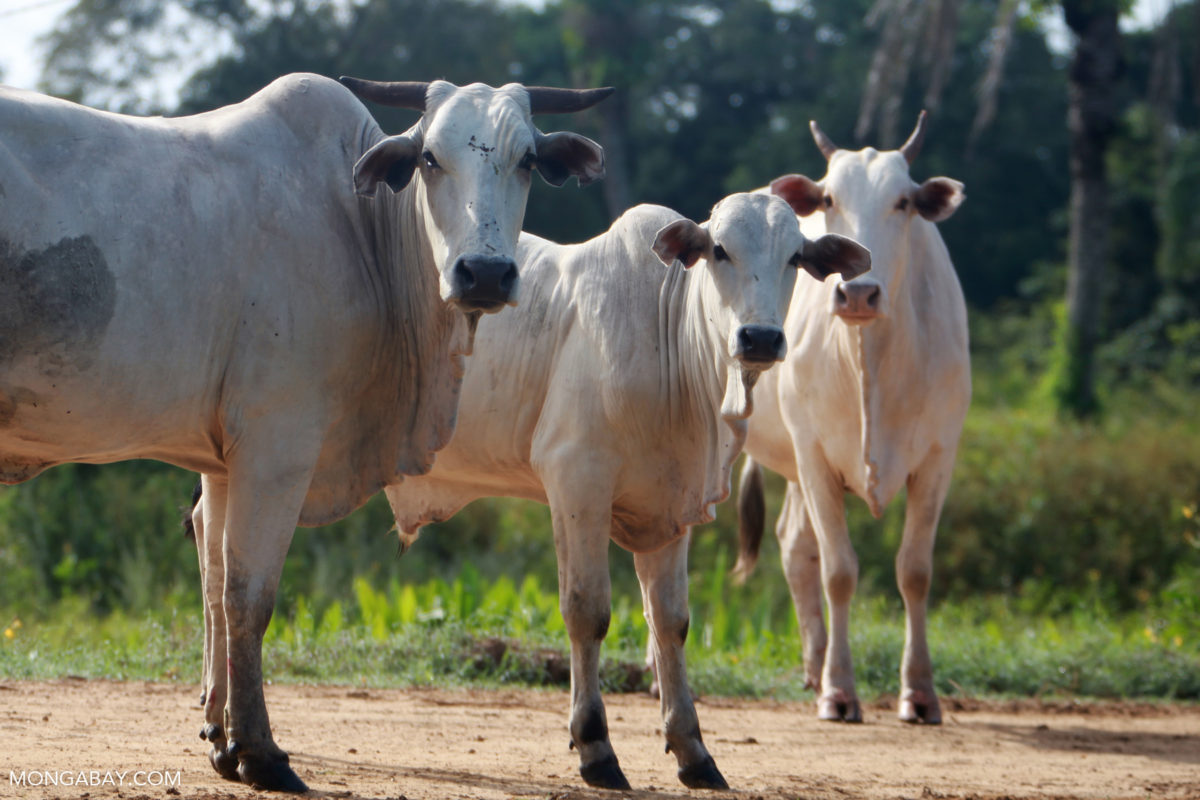
Since the early 1970s, environmental groups have spent billions of dollars on conservation efforts in the Amazon, but have failed to slow the destruction of its rainforests – the Brazilian Amazon has lost more than 700,000 square kilometers (270,000 square miles) of forest in that time. As donor dollars poured into the region, deforestation rates [Continue reading]
In the quiet flow of the Yangtze, a silent departure occurred. The Baiji, China’s exclusive river dolphin, known scientifically for its distinction and affectionately for its grace, has succumbed to the inevitable, declared “functionally extinct.” This term, clinical yet profound, marks the end of a lineage that navigated the waters of the Yangtze for over [Continue reading]
Categories
WSJ mention – September 8, 2006
Yesterday, my work got a mention in The Wall Street Journal. Emily Meehan’s “Not Letting Success Get to Your Head” piece opened with some background on Mongabay. The excerpt: High school reunions promise a treasure of surprises about former classmates, whether they invented a new type of digital movie camera, starred in a shampoo commercial [Continue reading]
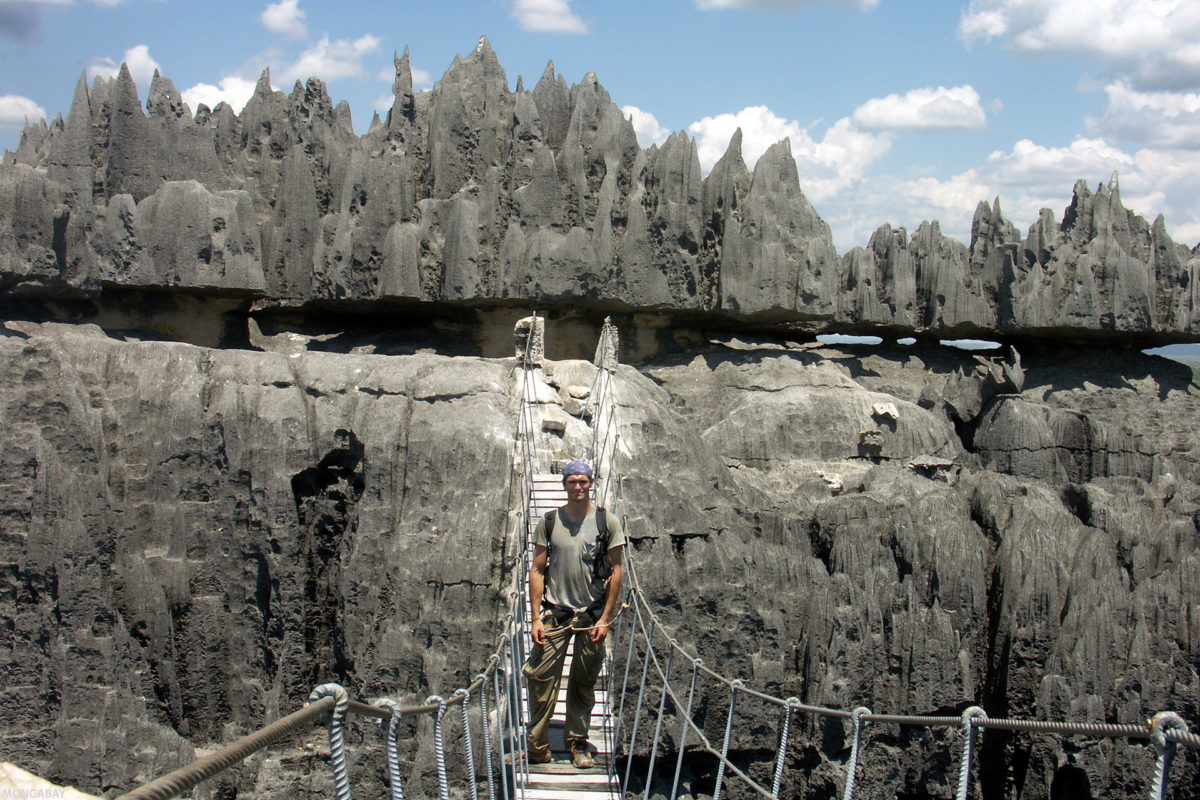
This is an excerpt from “A site of inspiration“, by Jessica Guynn, which appeared on the front page of the San Francisco Chronicle’s business section on July 5, 2006. Frankly, he gave a damn. It all began in 1996 when Rhett Butler — a young Silicon Valley vagabond named for the “Gone with the Wind” [Continue reading]
In the mist-shrouded highlands north of Monteverde, Costa Rica, a small amphibian once glowed like a living gem. The Golden Toad, with its brilliant male orange skin and the more muted, patterned colors of the female, inhabited scarcely more than a few square kilometers of cloud forest at roughly 1,500 meters elevation. From its discovery [Continue reading]