
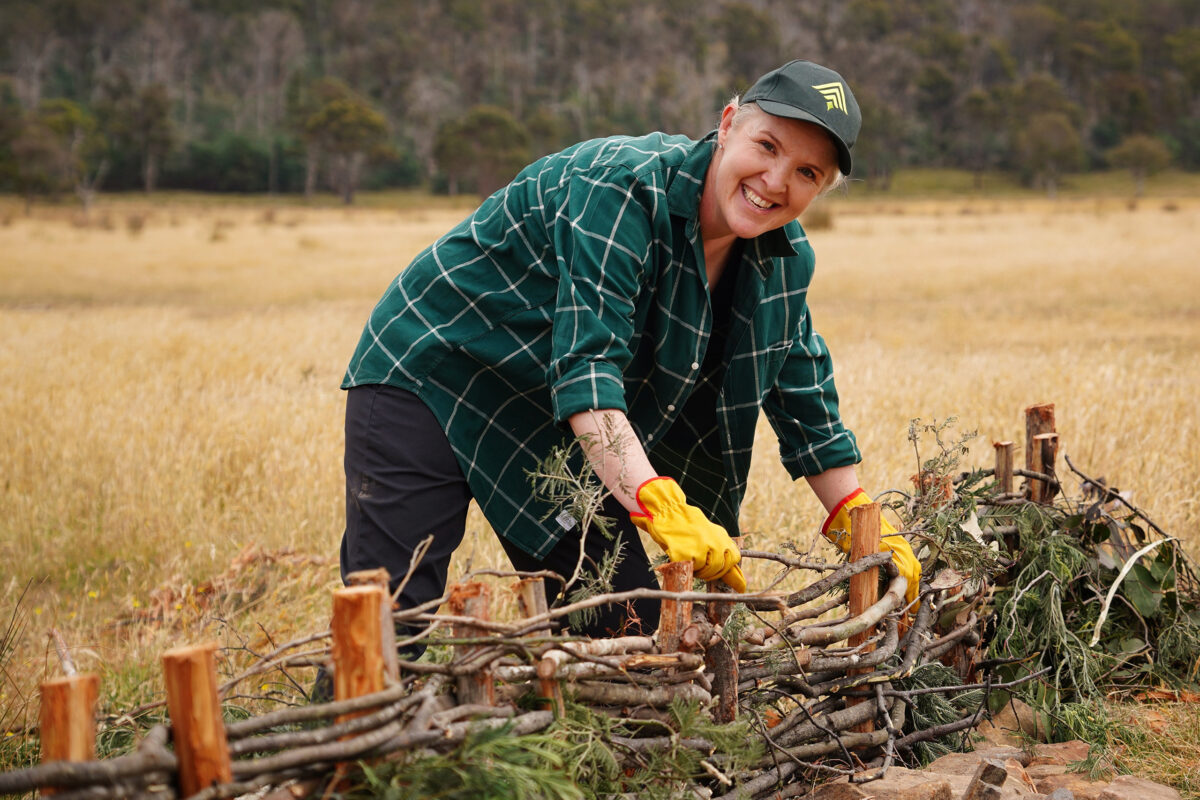
Lisa Miller did not come to biodiversity finance through markets or models. She came through animals.
Growing up in Australia, her interest in wildlife was personal and specific, long before conservation became a policy debate or an investment theme. That early pull led her to study zoology and later to work at the Australian Museum, where her days were shaped by taxonomy, observation, and scientific routine. But it was another strand of her work there that proved just as formative: science communication.
Helping translate research for public audiences exposed a quiet fault line. Knowledge existed, but it often failed to move—across institutions, into communities, or into decision-making. Some visitors arrived curious, others skeptical or disengaged. What changed was not just what they learned, but how close nature suddenly felt to their own lives. Miller began to see that conservation outcomes were shaped as much by systems of communication and organization as by science itself.
That insight eventually pulled her toward technology. In the early 2000s, the web still carried the promise of widening access rather than fragmenting attention. Over the next 18 years, Miller worked across technology organizations, learning how capital, execution, and governance determine whether ideas endure or stall. Those lessons became tangible through her partnership with her husband, Cameron Adams, a co-founder of Canva, as she watched a small team grow into a global platform—and saw how quickly resources concentrate once a model proves viable.
By 2019, the question shifted. It was no longer what could be built, but what should be done.
As climate change and biodiversity loss increasingly appeared as a single, accelerating crisis—underscored in Australia by catastrophic bushfires—Miller began asking whether business discipline and capital could be redirected in time to matter. The answer became the Wedgetail Foundation, a blended-capital platform combining philanthropy, loans, selective equity, and direct ownership of conservation land.
Wedgetail’s work in Tasmania reflects Miller’s core conviction: conservation is global in urgency but local in practice. Capital may move fast, but ecosystems do not. Restoration follows seasons, relationships, and long time horizons—not funding cycles.
Her perspective challenges a familiar divide between what is considered “investable” and what is treated as purely charitable. Many biodiversity efforts sit between those categories, not because they lack value, but because economic systems still struggle to see nature on their balance sheets.
What emerges from Miller’s path is a working approach—one shaped by experience, constraint, and patience. It treats biodiversity loss as a systemic challenge, requiring capital that is willing to stay, learn, and adapt over time.
