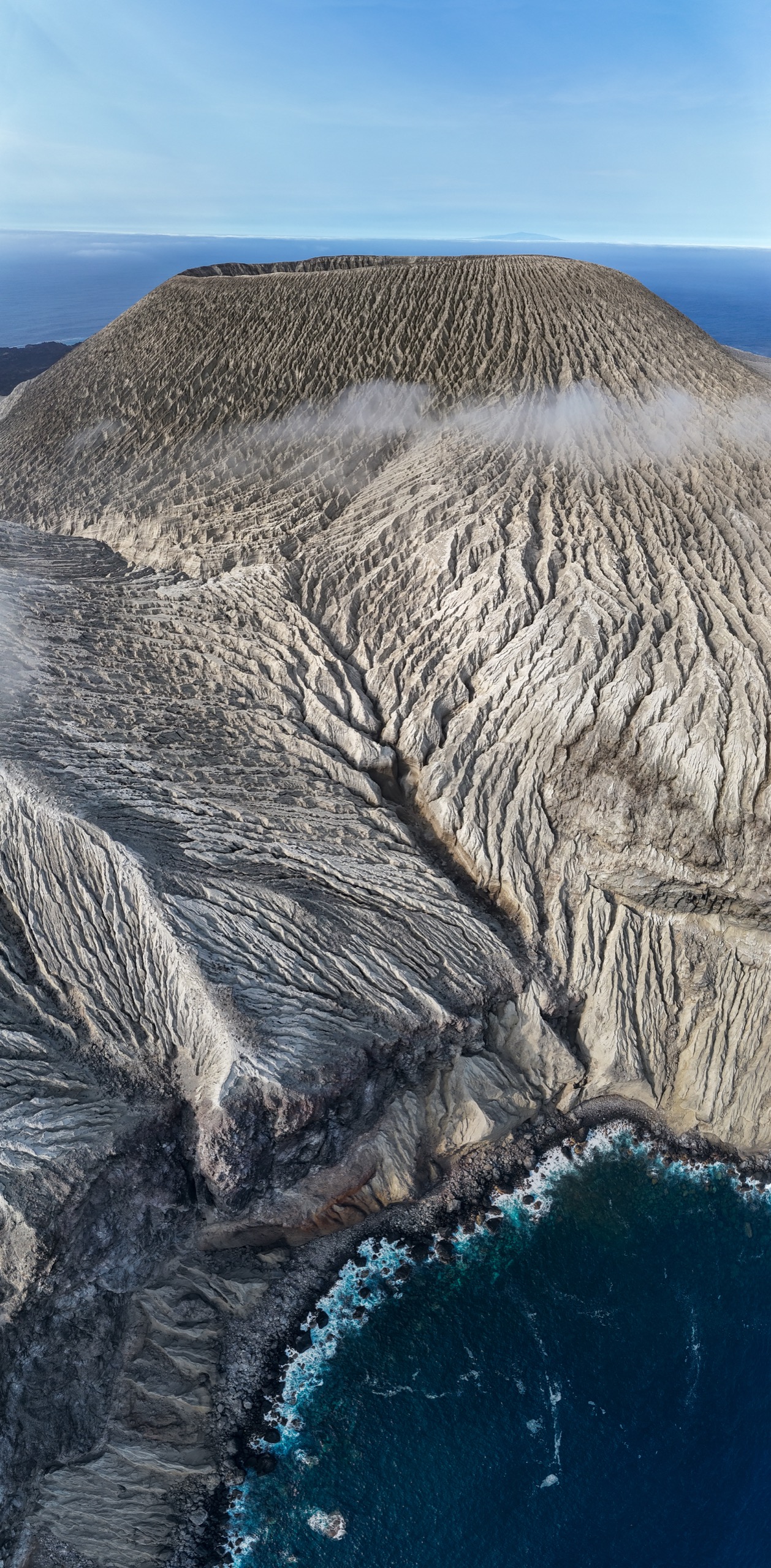

Last month, I had the opportunity to join a group of scientists and conservationists on an expedition to the Revillagigedo Islands, thanks to a cabin that had become available on their vessel. This remote volcanic archipelago, located roughly 285 miles off the southern tip of Mexico’s Baja California Peninsula, is not an easy place to reach. But few places feel more worth the journey.
Often referred to as Mexico’s “little Hawaii,” the Revillagigedo Islands are renowned for their biodiversity, particularly below the waterline. Whales, dolphins, sharks, and giant manta rays ply the deep blue surrounding the four main islands, while seabirds wheel overhead and endemic land species skitter across the sparse volcanic terrain. It is a place that feels simultaneously ancient and alive.
Recognition of their ecological value has grown. In 2016, UNESCO designated the archipelago a World Heritage Site. A year later, Mexico declared it a marine reserve and national park, prohibiting fishing and industrial activity across more than 57,000 square miles of ocean—one of the largest fully protected marine areas in the world.
Over the course of the trip, I interviewed several of the trip’s participants. These included Mark Erdmann of Re:wild, Alejandro González of Global Conservation, Martin Goebel of LegacyWorks Group, and Stefanie Brendl of Shark Allies, all of whom have spent their careers advocating for marine life. Their insights—about shark rewilding, high seas governance, and the challenges of scaling marine protection—have already appeared in articles on Mongabay.
The Revillagigedo Archipelago is a paradox. It is one of the most pristine ecosystems I’ve ever encountered, yet it exists under constant pressure. Climate change is reshaping ocean conditions in ways still being studied. Illegal fishing encroaches on protected waters. And the sheer scale of the park presents enforcement challenges for Mexican authorities. Yet during my time aboard, what stood out most was not the fragility of the place, but the tenacity of those working to safeguard it.
The scientists and advocates I met were deeply practical—concerned with real-world implementation, not just ideals. They spoke of data gaps, enforcement logistics, and geopolitical complexities. But they also spoke of possibility. For a few days in one of the wildest corners of the Pacific, I had the privilege of witnessing a rare convergence of nature, science, and purpose.
Here are some of my photos.