

Reforestation has long been viewed as one of the more hopeful climate interventions: a process that can, in theory, restore degraded landscapes, absorb carbon dioxide, and support biodiversity. But as sociologist Thomas Rudel makes clear, the return of forests is rarely a passive process. His decades of research highlight a more complex truth—one in which reforestation is shaped not only by ecological conditions, but by economic shifts, social movements, and, crucially, the actions and choices of people on the ground.
Rudel’s interest in forest change dates back to the late 1960s, when he served in the Peace Corps in Ecuador’s Amazon region. There, as a young volunteer assisting with land measurement and community-building efforts, he witnessed firsthand how forests were being cleared to make way for new settlements. The experience would go on to shape the trajectory of his academic career. After earning his doctorate, Rudel began conducting fieldwork with colonists and Indigenous communities in Ecuador, tracing both the causes of deforestation and the conditions that allow forests to regrow.
His latest book, Reforesting the Earth: The Human Dimensions of Reforestation, draws on that lifetime of scholarship. It focuses not just on ecological recovery, but on the political and social factors that determine whether reforestation takes root—and lasts. Natural climate solutions, Rudel argues, hold enormous promise, but only if they account for the lived realities of small farmers, Indigenous communities, and the institutions that govern land use.
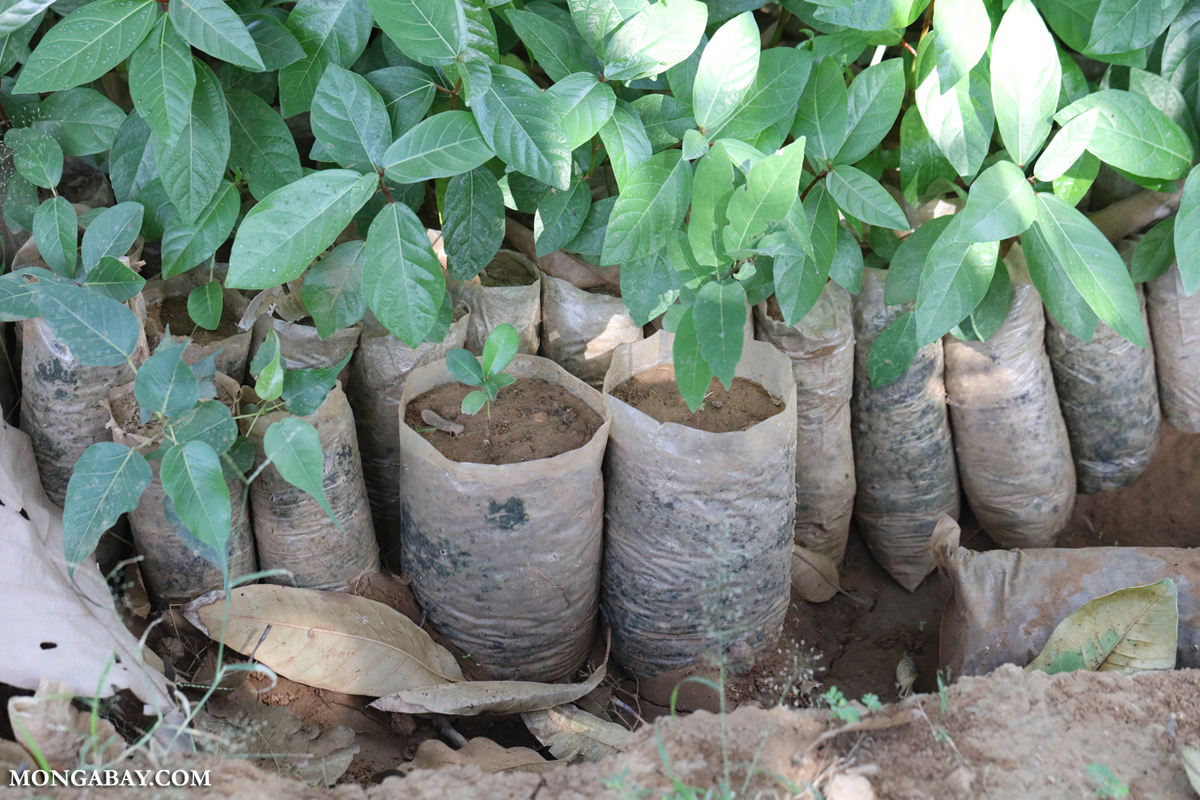
In a recent conversation with Mongabay, Rudel reflected on why top-down forest pledges so often fall short, how grassroots initiatives have succeeded in places where larger programs have struggled, and what a “double movement” of forest history might mean for the planet’s future. He explored the often-overlooked role of smallholder farmers, who, while lacking in political power, have been central to the reforestation of many lands. He discussed the tension between carbon-focused plantations and ecologically rich natural forests, and why neither alone will solve the climate crisis.
He also emphasized the importance of “corporatist coalitions,” partnerships that link global actors—like funders or NGOs—with local communities, creating structures that are both scalable and context-sensitive. These coalitions, he argued, can overcome the limitations of purely state-led or grassroots approaches by balancing funding security with local responsiveness.
Throughout the conversation, Rudel returns to a core idea: That reforestation is not simply a technical or ecological problem. It is a human one.
While technological solutions and climate finance schemes dominate much of the discourse, Rudel’s work reminds us that forests come back when people allow them to, protect them, and sometimes actively cultivate them. As the world grapples with intersecting crises of climate and biodiversity loss, that insight could prove critical.
What follows is a wide-ranging discussion with a researcher whose views are grounded in both personal experience and a lifetime of inquiry—one that challenges easy narratives about forest recovery and points toward more grounded, people-centered approaches to reforestation.
