
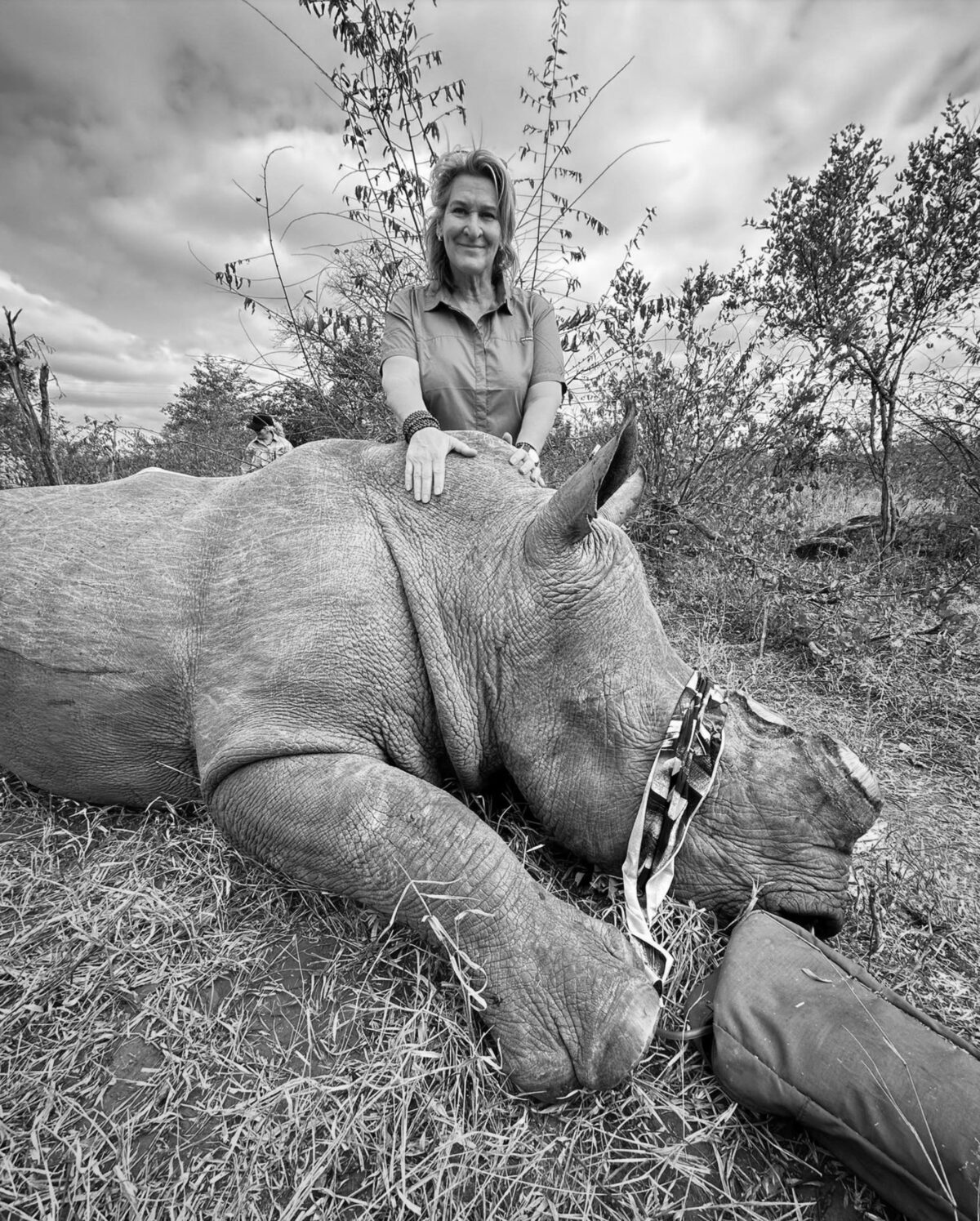
In the final months of her life, Sharon Haussmann could still be found walking fence lines, coordinating anti-poaching patrols, and debating the finer points of dehorning protocol with field rangers and policy-makers alike. The work was unrelenting, the stakes immense. But for Haussmann, the head of the Greater Kruger Environmental Protection Foundation (GKEPF), conservation was never a calling one answered from a desk. It was done in the bush, in boots, often before dawn, always among the people and creatures whose fate she had chosen to share.
South Africa’s white rhinos had in her one of their fiercest modern champions. As poaching syndicates turned increasingly militarized and the costs of protecting wildlife soared into the tens of millions of dollars, Haussmann helped lead one of the most ambitious rewilding operations in recent memory: the relocation of 120 southern white rhinos from a controversial breeding program into safer private reserves on the edge of Kruger National Park.
“They are literally ecosystem engineers,” she explained. “We need white rhinos.”
Each rhino was sedated, dehorned, and fitted with surveillance, the last steps in a fraught, hopeful journey back to the wild.
Haussmann was not only a strategist, but a scientist. Her fascination with hyenas—an animal often dismissed or reviled—led her to spend more than 3,000 hours at den sites. She published two papers on their behavior, offering a glimpse into the misunderstood social lives of one of Africa’s most intelligent predators. She spoke of them with admiration, not sentimentality.
Her ability to bridge worlds—scientific and operational, rural and bureaucratic, private and public—was the foundation of her work. As SANParks Chair Pam Yako observed, Haussmann’s “clarity of thought, strategic foresight, and deep understanding of the complexities of conservation partnerships” elevated the quality of every conversation she entered. She founded and led GKEPF through an era of expanding fragmentation and violent threat, insisting on coordination even when consensus felt out of reach.
She was raised on a farm, trained as an engineer, and named South Africa’s Female Farmer of the Year in 2004 for her work in sustainable land stewardship. Her career defied categorization. She equipped safari guides before sponsors stepped in. She ran youth soccer tournaments on reserve borders. She talked to elephants.
Her loss is profound, not only for those who knew her, but for the ecosystems and communities she fought to keep whole. Yet her example endures.
“We remain committed to the vision she so passionately championed,” her colleagues at GKEPF wrote.
She would have asked no less.
