
2020 is a year that many people would like to forget. Here’s a look at 10 of the biggest environmental storylines to remember. The COVID-19 pandemic The impact of the COVID-19 pandemic transcended virtually everything in 2020, including the environment, from canceled summits on climate and biodiversity to a temporary dip in air pollution and greenhouse gas [Continue reading]
Author: Rhett Ayers Butler
Rhett Ayers Butler is the Founder and CEO of Mongabay, a non-profit conservation and environmental science platform that delivers news and inspiration from Nature's frontline via a global network of local reporters. He started Mongabay in 1999 with the mission of raising interest in and appreciation of wild lands and wildlife.
Despite the COVID-19 pandemic, 2020 has been the year of the climate commitment, with a number of companies and governments announcing plans to reduce carbon emissions by a specified level at some point in the future. One of the boldest commitments to date has come from the tech giant Microsoft, which in January pledged to be [Continue reading]
Since hosting the United Nations Climate Change Conference in 2015 which resulted in the Paris Climate Agreement, France has become a leading proponent for tropical forest conservation. This effort has included establishing a National Strategy to Combat Imported Deforestation (SNDI) to effectively apply a zero deforestation policy to commodities produced at the expense of forests in the [Continue reading]
Categories
Bay Area redwood forest
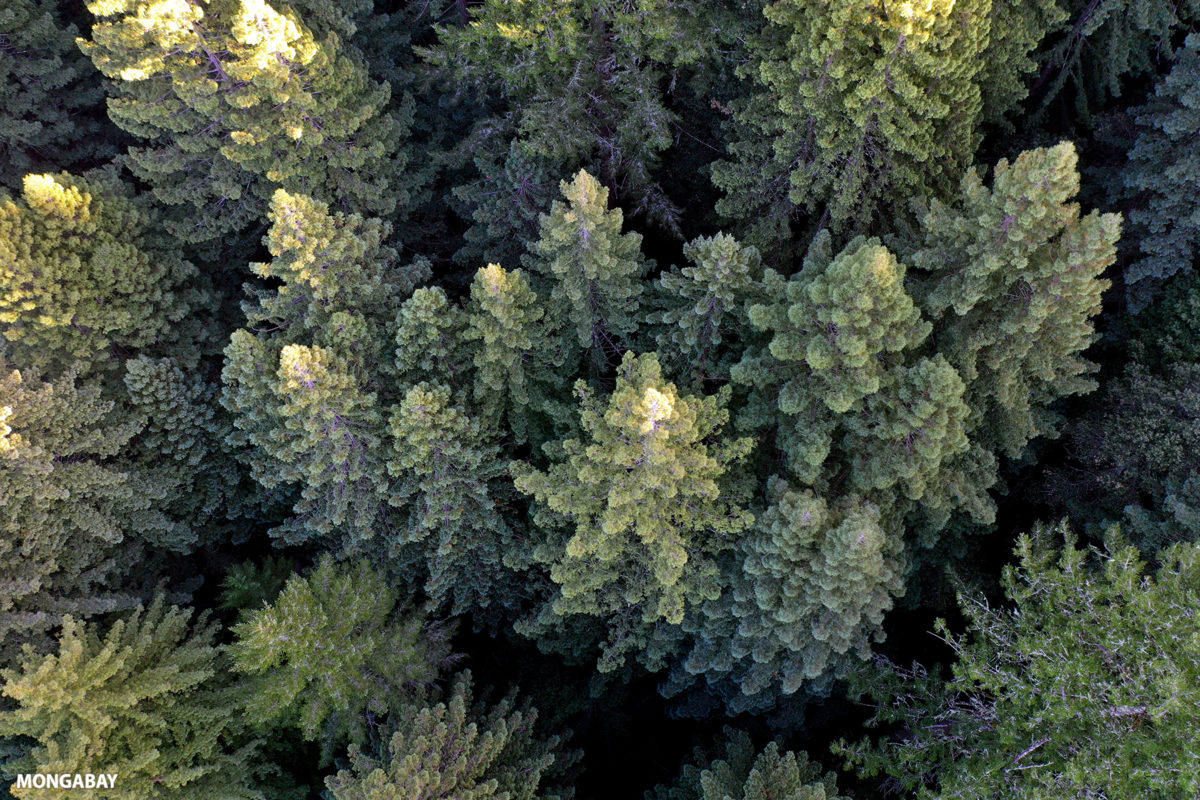
Redwood forest in the San Francisco Bay Area during Thanksgiving week, 2020.
2020 was supposed to be the year that governments, business leaders and civil society came together to report back on the past decade’s worth of progress on addressing the biodiversity crisis. But the COVID-19 pandemic intervened and most of the big meetings scheduled for 2020 were scaled down or postponed until 2021. But that doesn’t [Continue reading]
More than 21 years ago I established Mongabay out of my love for nature and wildlife. Today the endeavor has grown far beyond what I could have ever imagined with a team of dedicated journalists spanning the world producing content in several languages, monthly readership numbering in the millions, and tangible real-world impacts. I’m now pleased [Continue reading]
Categories
Kauai 2020: sea turtles and sunsets
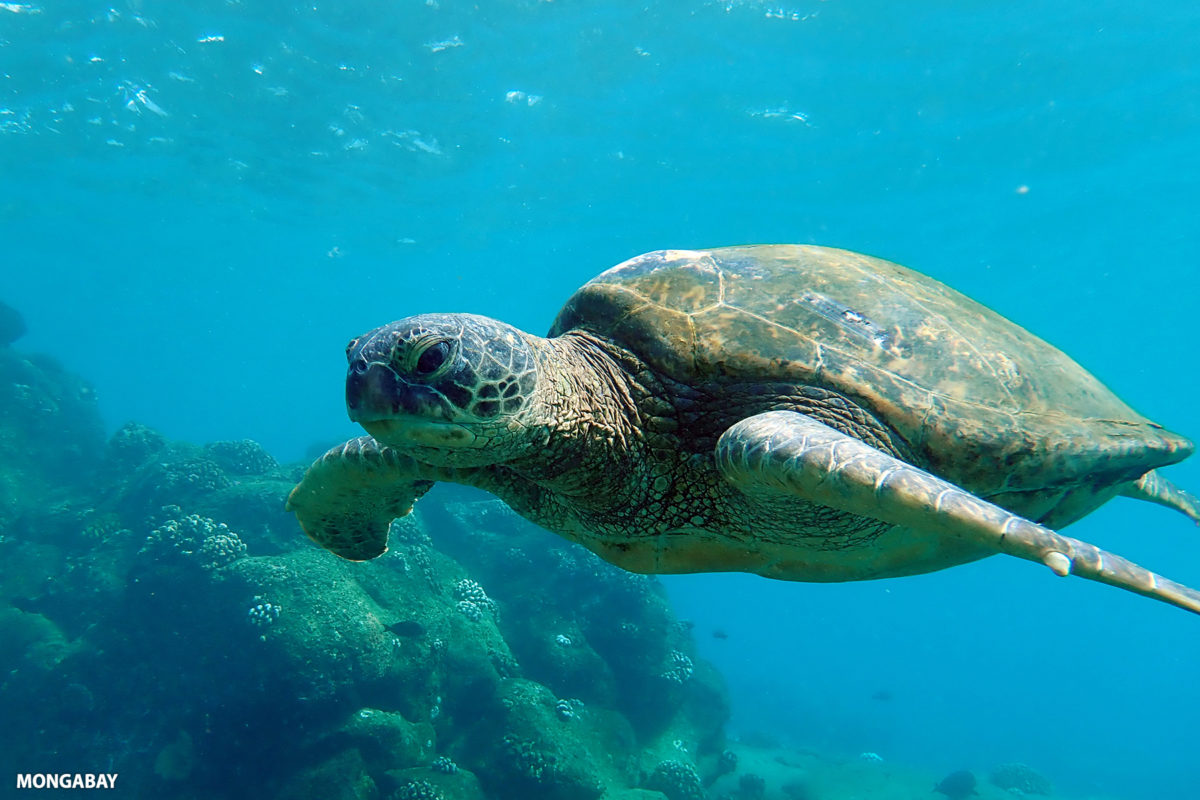
An abundance of green sea turtles in Kauai in 2020.
In August this year, a fleet of around 300 Chinese fishing vessels attracted international attention when they congregated just outside Ecuador’s territorial waters around the famed Galápagos Islands. Said to be fishing for squid, the fleet’s checkered past raised concerns about the possibility the ships were actually targeting sharks and other threatened species. While there was great [Continue reading]
If you were born in the 1970s, 1980s, or 1990s in the United States or Canada, there’s a good chance you are familiar with the song “Baby Beluga.” The song, which is about a young whale swimming in the ocean with its mother, was written by Raffi Cavoukian, a Canadian singer-lyricist who was once called [Continue reading]
Today, maps are a critical part of nearly all place-based conservation efforts. Maps enable scientists and conservation practitioners to identify where they operate, allocate resources, organize and present data, and communicate the results of their work. It’s hard to imagine modern-day conservation without maps. Before the age of computers, map-making was typically the domain of [Continue reading]
This week, scientists from James Cook University in Australia announced the discovery of a previously unknown detached coral reef in the Great Barrier Reef. It was the first new reef to be discovered in the area since the late 1800s. The discovery was made by an underwater robot launched by a team aboard the Falkor, a research [Continue reading]
In the decade following the end of the U.S. Civil War, a group of people led by physician and horticulturist John Aston Warder established the American Forestry Association to create a constituency for protecting the country’s fast-disappearing forests. The group advocated for better stewardship of forests, including the creation of forest reserves to maintain timber [Continue reading]
The second half of the 20th century was a time of unprecedented change in the Amazon rainforest. The ecosystem was opened up by government road-building and colonization schemes in the 1970s and 1980s, unleashing a spasm of large-scale deforestation unlike anything seen in human history. But that period was also characterized by a great expansion [Continue reading]
2020 was supposed to be the year that the world assessed progress on a decade’s worth of effort to stave off the sixth mass extinction — the first extinction driven by the activities of a single species — and set ambitious new targets for conservation. But the COVID-19 pandemic intervened, leading to postponement of the [Continue reading]
Until recently, protecting the environment was a bipartisan issue for Americans. But in an era marked by bitter divides, this is no longer the case. Bruce Babbitt, former governor of Arizona and Secretary of the Interior in the Clinton Administration, believes that environmental protection can again be a unifying issue for Americans. But to get [Continue reading]
Wade Davis is a celebrated anthropologist, ethnobotanist, photographer, and author who has written thought-provoking accounts of indigenous cultures around the world. These have ranged from The Serpent and the Rainbow about the “zombies” in Haitian vodoun religion to One River about the explorations of famed ethnobotanist Richard Evan Schultes who studied the remarkable knowledge of traditional shamans in the [Continue reading]
Bloomberg Philanthropies, the foundation launched by businessman and former New York City mayor Michael R. Bloomberg, is one of the world’s largest charitable organizations. According to the Foundation Center, the foundation’s $7.15 billion in assets in 2015 made it the 10th largest foundation in the United States that year. Bloomberg says it distributed $3.3 billion [Continue reading]
Over the past decade perhaps no major diversified consumer products company has done more to burnish its sustainability credentials than Unilever, the 91-year-old conglomerate that owns brands ranging from Dove soap to Lipton tea to Ben & Jerry’s ice cream. A driving force behind this shift was Paul Polman, who took the helm of the [Continue reading]
The Global Environment Facility (GEF) is one of the largest and most influential environmental funders in the world. Since its inception in 1992, the GEF has provided more than $20 billion in grants for over 4,800 projects and 170 countries, engaging some 24,000 civil society and community groups. Yet the institution remains less well known to [Continue reading]
Earlier this month Rieli Franciscato of the Brazilian government’s Indigenous affairs agency FUNAI was killed on the edge of the Uru-Eu-Wau-Wau Indigenous territory in Rondônia, Brazil. Franciscato, a sertanista or elite forest Indigenous expert, had worked to protect the rights and territory of Indigenous peoples living in voluntary isolation in the Amazon rainforest. His death is thought [Continue reading]
It might be hard to believe in the current political climate, but public lands were a unifying issue for Americans until quite recently. Most Americans have supported the idea of the government owning and managing large areas of land for public use, and that bipartisan consensus has culminated in the creation of vast network of [Continue reading]
Like the rainforest which takes its name, the Amazon is the largest and most biodiverse river on the planet: the Amazon carries more than five times the volume of world’s second largest river — the Congo — and its basin is home to at least 3,000 species of fish. The river and its tributaries are a critical thoroughfare for [Continue reading]
New Guinea is the planet’s most floristically diverse island, reports a comprehensive assessment of vascular plant species published in the journal Nature. The species list, which was compiled by 99 botanists from 56 institutions across 19 countries, verified the identity of over 23,000 plant names from over 704,000 specimens collected from New Guinea since the [Continue reading]
Tropical rainforests have an outsized role in the world. Of the Earth’s ecosystems, rainforests support the largest variety of plants and animal species, house the majority of indigenous groups still living in isolation from the rest of humanity, and power the mightiest rivers. Rainforests lock up vast amounts of carbon, moderate local temperature, and influence rainfall [Continue reading]
Deforestation in Earth’s largest rainforest increased for the fourteenth consecutive month according to data released today by the Brazilian government. Deforestation in the Brazilian Amazon is currently pacing 83% ahead of where it was a year ago. Data from Brazil’s national space research institute INPE shows that 830 square kilometers (sq km) of rainforest was [Continue reading]