Near Brazil’s Belo Monte dam, one of the world’s largest hydropower projects, the promise of abundant electricity has proved uneven. A household survey of 500 families in Altamira found that 86.8% experienced higher electricity costs after the plant began operating in 2016. Many riverside residents still endure outages, pay steep tariffs, or rely on diesel generators. As Emilio Moran, a social anthropologist at Michigan State University, observed, “People are right under the transmission line, but the energy doesn’t come from that hydroelectric plant.”
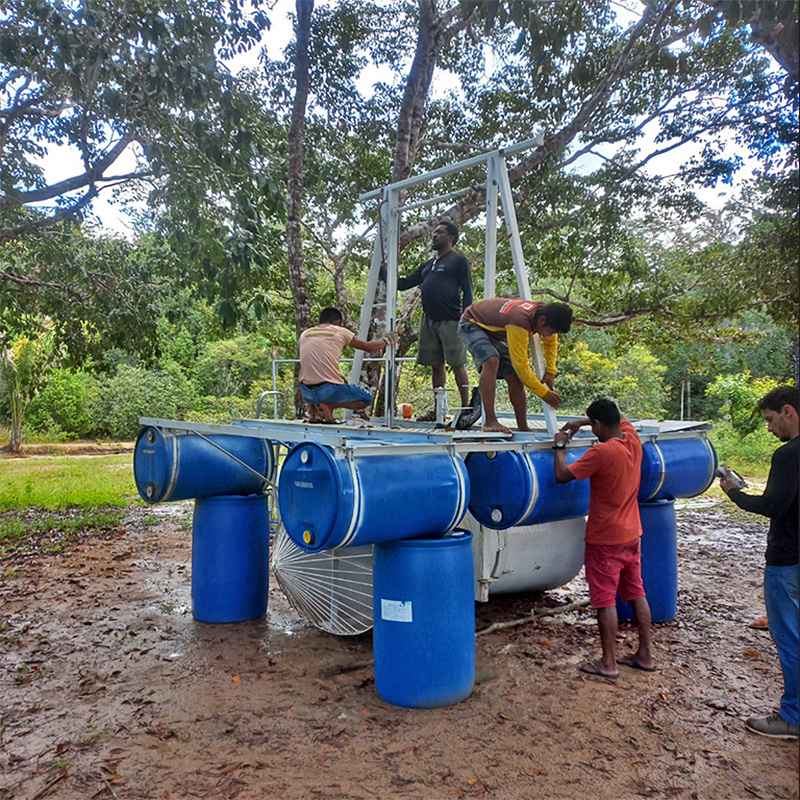
For some communities deeper in the Amazon, waiting for grid expansion has yielded little. In the Tapajós-Arapiuns Reserve near Santarém, researchers and residents have instead built small, independent energy networks, reports Jorge C. Carrasco. Launched in 2023, the pilot combines solar panels with hydrokinetic turbines placed in river currents. The aim, said project coordinator Lázaro Santos, is straightforward: “that we bring energy to contribute to improving the quality of life of these communities.”
The hybrid design addresses the limits of each technology. Solar output varies with daylight, while river turbines generate power continuously. For villages long dependent on diesel, the shift has been tangible. One resident recalled that fuel deliveries required multi-day boat trips, and electricity was rationed to a few evening hours. Today, a communal freezer runs around the clock, enabling food storage and modest commerce. Internet access and emergency communications have also improved.
Crucially, the project trained local technicians to operate and repair the equipment. Three residents in one village can now maintain the system themselves. This emphasis on autonomy reflects a broader lesson: infrastructure need not arrive fully formed from outside to be effective.
Several practical insights emerge:
- Small, modular systems can deliver reliable power where large grids are slow or costly to extend.
- Combining energy sources reduces vulnerability to weather or seasonal change.
- Local training builds resilience and lowers long-term operating costs.
- Shared assets, such as community freezers, can spread benefits even when generation is modest.
The initiative currently serves about 200 people, with plans to expand. It does not resolve the wider inequities associated with large dams. Yet it suggests that communities facing resource constraints are not without options. With technical support and local organization, incremental solutions can materially improve daily life while larger debates over energy policy continue.
