Indonesia’s environmental challenges can feel overwhelming when taken as a whole. A country often said to contain more than 17,000 islands, it holds the world’s third-largest tropical rainforest—and a resource economy that has reshaped much of that landscape. For many Indonesians, modern development is experienced not in graphs but in the air around them: childhoods spent under yellowed skies, peat-smoke drifting into classrooms, the sweet-acrid smell that clings to shirts long after the fires burn out. Others recognize the shifting environment in subtler ways, like the ground growing wetter where it once stayed firm or the metallic tang in Jakarta’s air on days when pollution monitors flash red.
For Sapariah “Arie” Saturi, these are not distant impressions. They are the texture of her early life along the Kapuas River in West Kalimantan, a region defined by peatlands, forests, and the heavy footprint of timber, palm oil, and mining interests. Dry seasons in the 1990s often brought fires and a haze so thick it dulled both sound and color. Eyes burned after minutes outdoors; masks were uncommon. Children adapted because they had no choice.
Arie now lives in Jakarta, where the problems are different but equally immediate. The capital sinks a little more each year, traffic strains patience, and even a brief gust through an open window can leave a chemical scent lingering in the curtains. On weekends she escapes to a nearby village, tending mint and chilies in rows of pots. A friend once joked that her garden was “offline environmentalism” compared to Mongabay’s online work. She let the joke stand.
Her journalism career took shape after the fall of Soeharto, during a burst of media openness in the late 1990s. She started in Pontianak, moving between small newsrooms, learning through trial, error, late-night writing, and stacks of magazines bought from a 24-hour stall. The persistence stuck. “Tak bisa ke lain hati,” she says. Her heart cannot be redirected elsewhere.
Arie joined Mongabay Indonesia when it was still a tiny operation. Environmental coverage in mainstream outlets was often sidelined or softened, especially when it involved companies that bought advertising space. Mongabay’s independence was a rare chance to pursue the stories others ignored.
Today she manages reporters across the archipelago, beginning her days before dawn with edits, coordination calls, and field updates. Some stories take days of checking, others only an hour, but the flow never stops—from Sumatra’s peatlands to Sulawesi’s nickel mines.
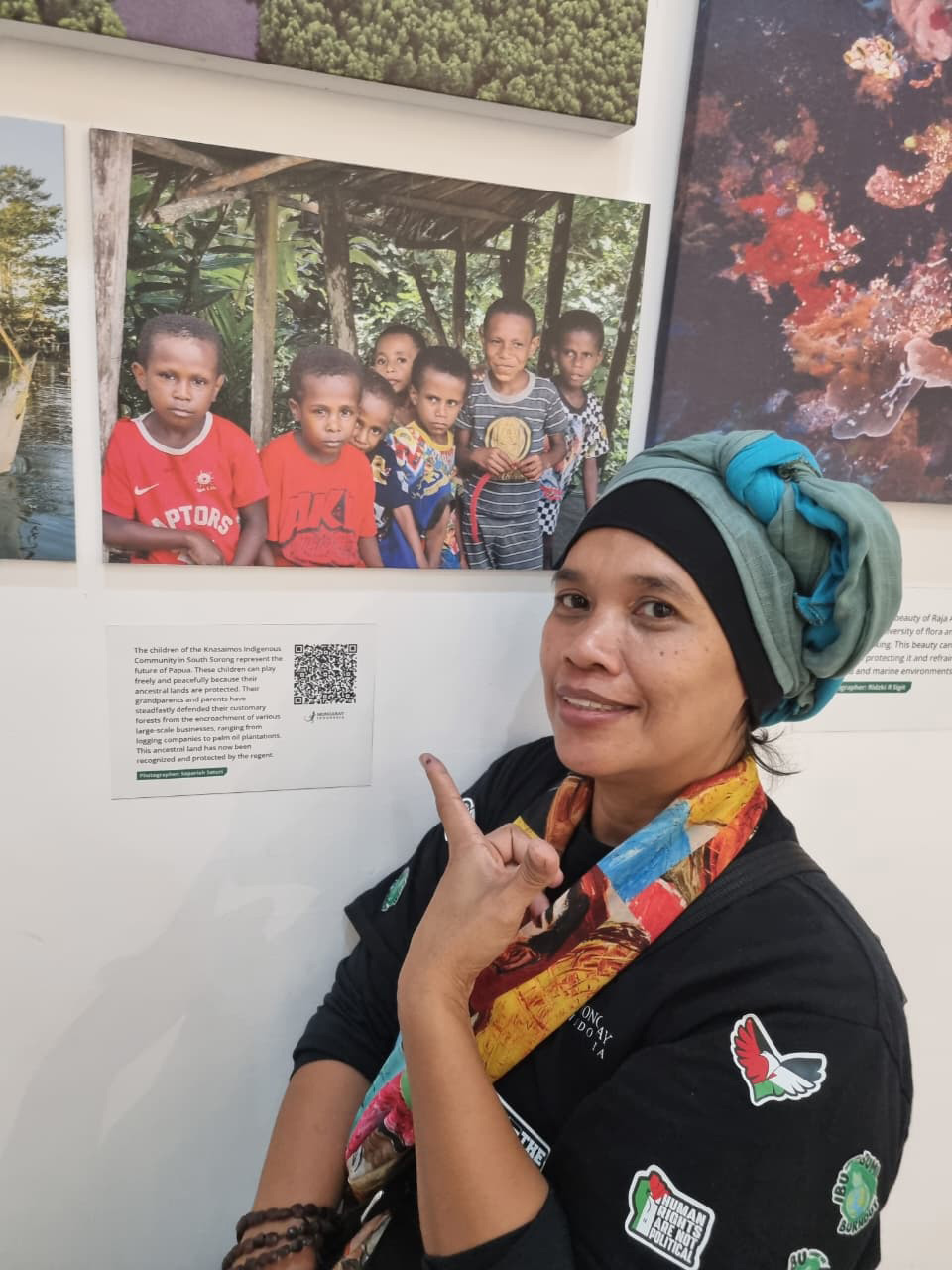
For Arie, journalism is a way to amplify the voices of people who are too often unheard: communities defending customary forests, farmers trapped in debt cycles, island residents resisting destructive mining. Sometimes coverage triggers policy changes; sometimes it simply affirms people’s experiences. Both matter.
