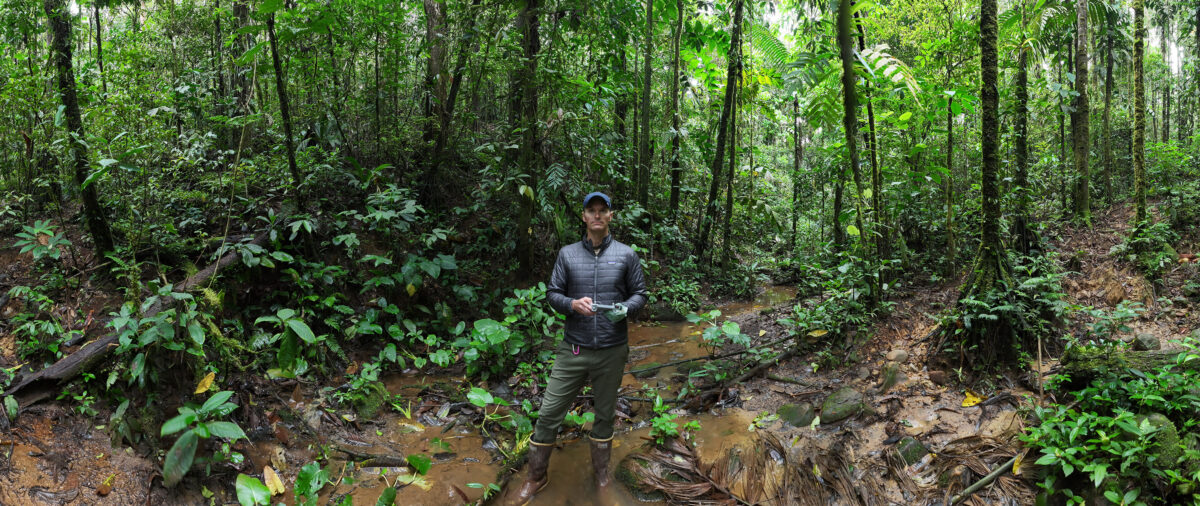
I never set out to be a journalist. Journalism wasn’t the plan. It wasn’t even on the horizon. When I was younger, my passions were rivers and fish tanks, frogs and forests—the small but miraculous lives unfolding in the creases of leaves or beneath the surface of water. I loved to lose myself in those places.
But loving nature is one thing; understanding that it can vanish is another.
A boy and the rainforest
That lesson arrived early in eastern Ecuador, along the Río Napo—a river that begins as an icy Andean creek, gathers speed through rainforest long stewarded by Indigenous peoples, and then slows to a meander before meeting Earth’s mightiest river, the Amazon. As a 12-year-old in 1990, I spent an enchanting week there, exploring the forest with native guides and beholding the Amazon’s glory for the first time: teeming swarms of multicolored butterflies gathering on beaches, cryptic caimans lying in wait among swampy shallows, and raucous parrots arcing overhead.


Several months after I returned home, a headline in the San Francisco Chronicle caught my eye: a ruptured pipeline had spilled vast quantities of oil into the Río Napo. The disaster was so severe that Brazil, downstream, declared a state of emergency. All I could think about were my friends in the forest and the animals that animated it.
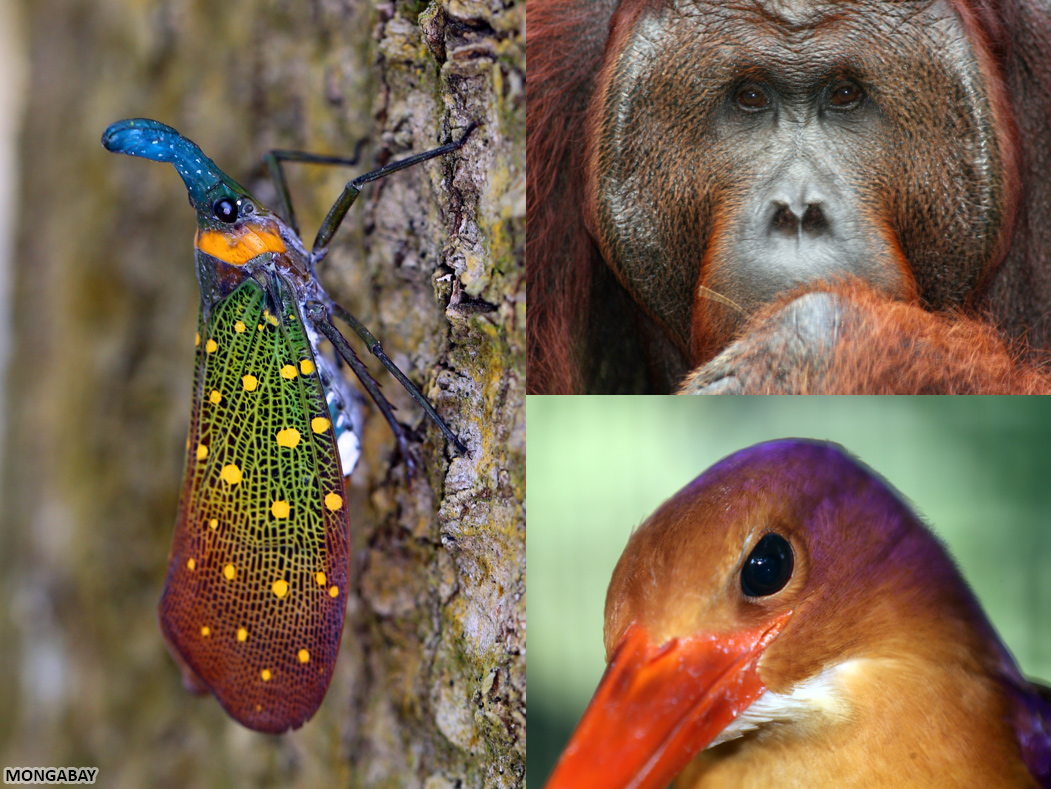
That news shifted me from a kid obsessed with tropical frogs to someone who tracked environmental issues. Five years later, halfway around the world in Sabah, Malaysia, curiosity became commitment. I was sitting by a jungle creek in Borneo, the forest alive with hornbills, cicadas, and butterflies, when an orangutan appeared. He moved silently, almost as if he belonged to another world. For a moment our eyes met, and I felt something humbling and profound: a reminder that this planet is not ours alone.
Weeks later, I learned that forest would be cut down to make paper pulp. The orangutan’s home, the hornbills’ home, the butterflies’ home—gone. It was my first taste of a grief that would repeat itself, again and again, in different forms and places.
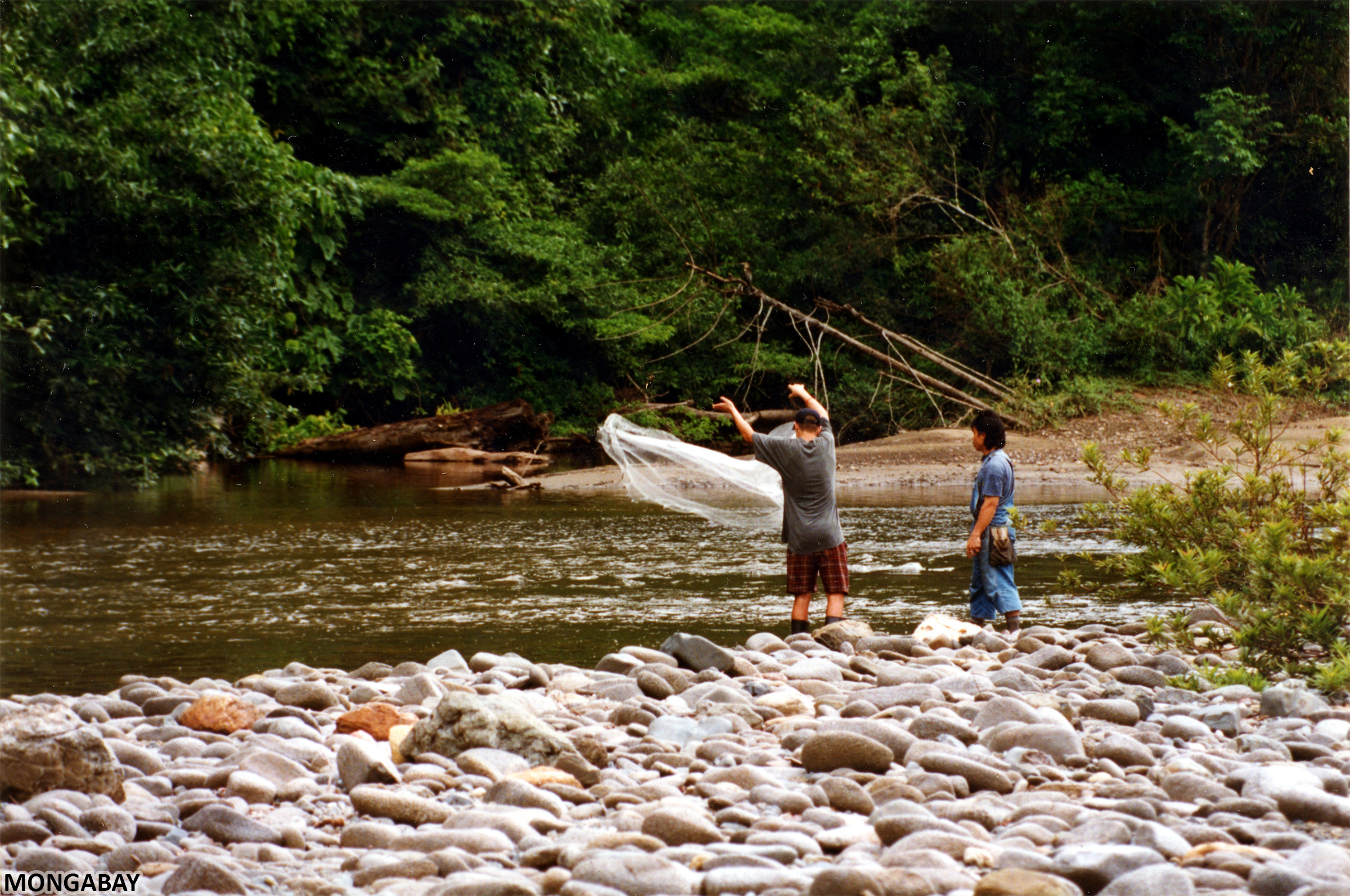

By then, writing had already become part of how I tried to make sense of the world. At 15, I had started writing a book on tropical freshwater aquarium fish—a subject that might seem arcane, but at the time it was my obsession. I kept over a dozen aquariums, read academic papers, and even lugged a heavy throw-net on trips to catch and identify species in the wild. That work, disciplined and deeply researched, was not in vain: I sold the manuscript to a major publisher. Only later did I realize they had bought it mainly to keep it off the market. Fortunately, my father and I had included a clause that returned the rights to me, and the text eventually became one of my first websites.

In college, I turned my attention to tropical rainforests after that experience in Borneo, pouring myself into a book called A Place Out of Time. A university press was interested, but the deal faltered when the publisher declined to include color photographs unless I paid the costs upfront. That decision left me at a crossroads. I hadn’t written the book for money; I wanted impact. So I made what seemed at the time like a modest choice: I uploaded the manuscript online so anyone could read it for free.
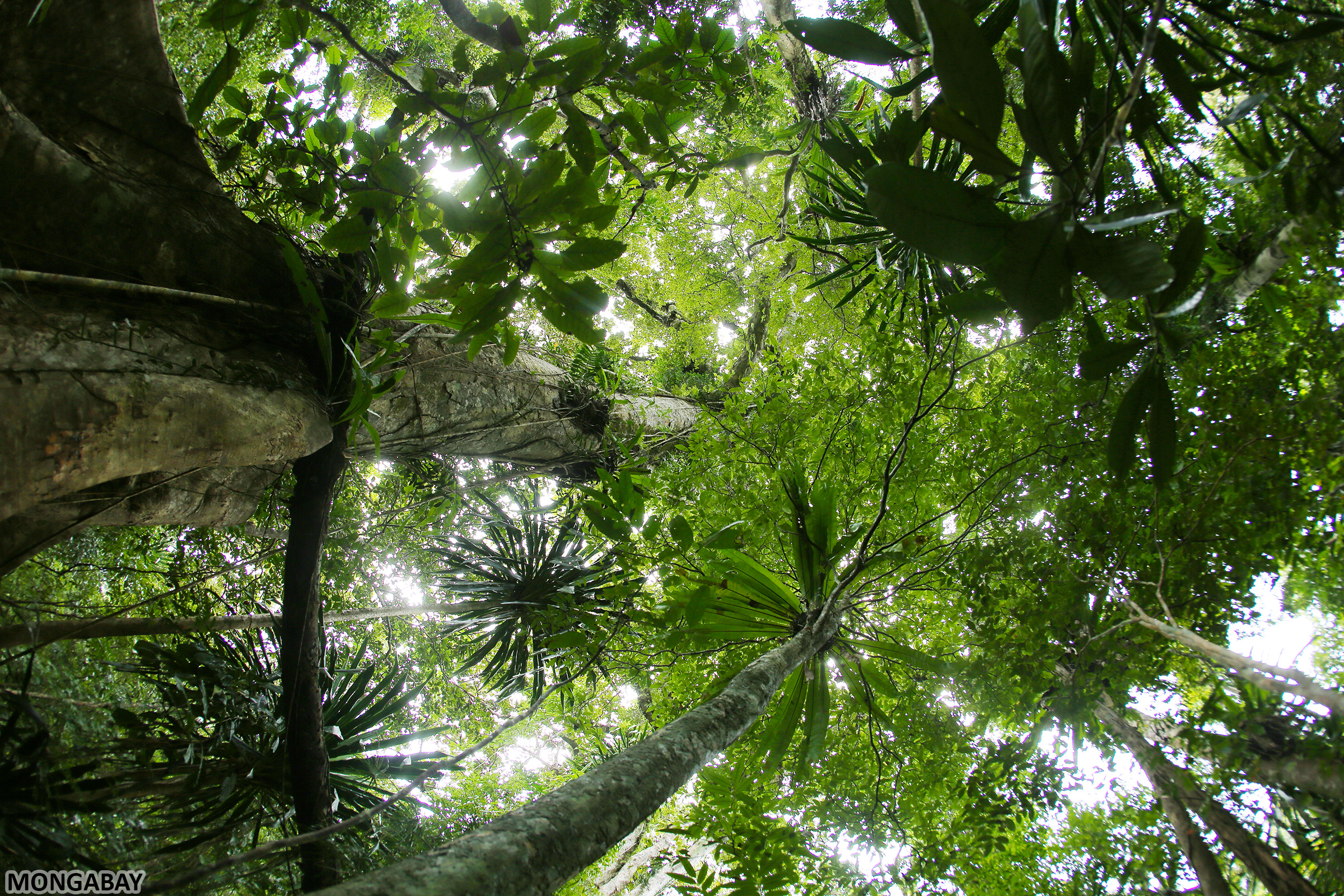

That choice—the boy with the aquariums, the student with the rainforest book—was what grew into Mongabay. Not through happenstance, but through persistence, curiosity, and the refusal to let these places be forgotten.
A guy in his pajamas with a laptop
When I left my Silicon Valley job in my mid-20s, I was young enough to think that risk was temporary, that even failure could be survived. Mongabay was little more than a website, and I was little more than a guy typing in his apartment in pajamas.
There were no employees, no investors, or roadmap. Just thousands of hours of work I had already poured into writing, research, and photography. By the time I put ads on the site in 2003, I had invested more than 15,000 hours in the project. That was my startup capital.
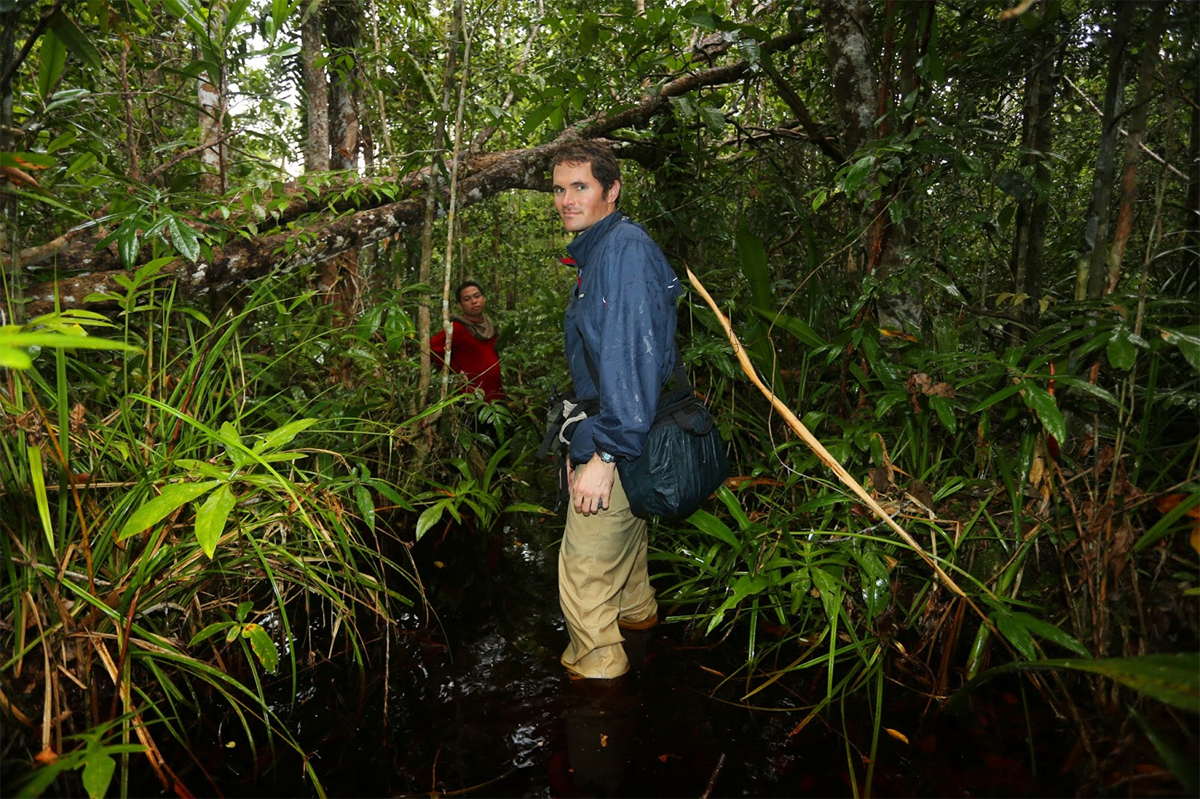
The early years were grueling. I lived simply, cut costs, and produced hundreds of stories a year by myself. I built a children’s section, translated into nearly 40 languages by native speakers; developed an environmental news service; took tens of thousands of nature photos from around the world; and answered a torrent of emails from people who assumed Mongabay was some vast enterprise rather than a shoestring operation run by a random guy in an apartment.
Yet those were also years of deep joy. When asked what I’d do with a day off, my answer was: “Exactly what I’m doing.” The lack of formality freed me to travel for extended periods, documenting forests, meeting Indigenous guides, and spending time with conservationists. Those encounters became some of the most formative of my life.
A fragile leap
The first time I paid someone else to write for Mongabay, it was my sister. She was stuck in a dead-end job and wanted to work on sustainability. I told her I’d support her until she found her footing. She thrived, covering stories that deserved attention—Amazon cattle ranching, collapsing forest cycles, and endangered species.
Then came Jeremy Hance, a graduate student whose passionate writing about the extinction of the Yangtze River dolphin struck me deeply. He became Mongabay’s first intern, later its first full-time hire. His writing expanded the reach and quality of the site enormously.
But it wasn’t Jeremy’s work that taught me journalism could drive change—I had already seen that for myself. It was the very reason I launched the news section in 2005: because I saw a gap between sporadic mainstream coverage and advocacy communications, and I believed consistent, fact-based reporting could shift the conversation.
What Jeremy’s arrival underscored was how much more Mongabay could do with a team, however small. His reporting stopped destructive projects in Papua New Guinea and Malaysia, showing in concrete terms what I had long believed: journalism could give communities tools to resist exploitation and make governments more accountable.
These years were fragile. In 2008, when the financial crisis hit, advertising revenue collapsed. I had just promised Jeremy a job. To keep that promise, I stopped paying myself and lived off savings for a year and a half. It was a gamble, but one I don’t regret. Those lean months proved that perseverance—and belief in the mission—could carry us through.
A new path: nonprofit
By the early 2010s, the ad business had rebounded. Mongabay’s traffic was climbing, and revenue had stabilized. But I could see the limits of an advertising-based model. Ads supported volume, but not necessarily depth. They rewarded clicks, not impact.
The decision to start a nonprofit was not born of desperation. It was strategic. A lot of people already thought Mongabay was a nonprofit, so the transition felt natural. More importantly, a nonprofit model would allow us to focus squarely on impact—measuring success not in pageviews, but in whether our stories informed policy, supported communities, or shifted debates.
Indonesia was the proving ground. At the time, the country was at a crossroads: deforestation rates were staggering, but there were signs that transparency and accountability might influence national policy. I believed independent journalism could make a difference there. With support from the Ford Foundation, we launched Mongabay Indonesia in 2012.

The results exceeded anything I had imagined. Within months, it was the most-read Indonesian-language environmental news site. By 2014, we heard that the president himself was reading our articles. More importantly, our reporting was exposing corruption, empowering communities, and raising awareness at a national scale.
That success shaped the model for everything that came after: Mongabay Latam, Mongabay India, Mongabay Africa. It showed that local-language, locally staffed bureaus could have outsized impact. It confirmed that the nonprofit path was the right one—not because advertising failed, but because impact required a different compass.
Lessons from the early years
Looking back, I see a handful of lessons that shaped the journey:
- Resourcefulness beats resources. There was no big startup fund, no trust-fund safety net. Time was my capital. Being scrappy wasn’t a choice, it was survival.
- Nuance matters. Environmental stories are rarely simple. Palm oil is not just “bad,” forests are not just “good.” Understanding complexity helps people make better decisions.
- Solutions matter. Reporting only devastation numbs readers. Reporting hope restores their agency.
- Impact outlasts metrics. It’s tempting to chase pageviews. But real change comes from who reads a story and what they do with it.
- Gratitude and humility matter. Luck, timing, and the kindness of others played outsized roles.
These lessons are not revolutionary. They’re simple. But they have carried me through.
The paradox of this work
Environmental journalism is heavy. Every day, our team documents loss—species vanishing, forests burning, oceans emptying. Bearing witness to these truths is essential, but it can feel unbearable.

What sustains me are the paradoxes: the park ranger in Indonesia rewilding land no one believed could recover, the fisher in Madagascar rebuilding governance without pay, the scientist in Colombia restoring trust between communities and conservation. They embody both grief and resilience. They show that amid destruction, people are still choosing to protect what they love.
Hope, I’ve learned, is not the opposite of truth. It’s what makes truth livable.
Writing and remembrance
Over time, my role shifted. I had to give up most of my writing to focus on building an organization. That was painful. Writing was how I processed the world. Losing it felt like losing a part of myself.
But in recent years, I’ve rediscovered writing in new forms: Reflections, tributes, obituaries. These pieces are not about breaking news. They are about meaning. They remind me—and hopefully readers—that conservation is not abstract. It’s human. It’s the ranger gunned down protecting gorillas, the Indigenous leader silenced for defending rivers, the species on the edge of extinction. Their stories deserve to be told.
Sometimes I draft obituaries for species like the vaquita—a porpoise so shy and rare that most people will never see one. Writing those pieces breaks me open, but it also steels my resolve. If enough of us care, maybe those animals’ obituaries will never need to be published.
What the wild gave me
At its heart, Mongabay is an attempt to honor what the wild has given me. Standing beneath Auyán-Tepuí in Venezuela, watching Angel Falls dissolve into mist, I felt small and wordless, stripped of pretense. That awe is what animates everything we do at Mongabay. Because once you have felt that power—the kind that humbles, not dominates—you cannot walk away.

I don’t pretend that Mongabay alone will save forests or species. We are a thread in a larger fabric, woven by countless communities, activists, scientists, journalists, and ordinary people who refuse to give up. Our role is to provide credible information, to amplify unheard voices, and to stitch together both the grief and the hope into a fuller picture of what’s at stake.
A hopeful ending
If there’s one thing I’ve learned, it’s that meaningful work is not about individual achievement. It’s about the people who believe in a mission and carry it forward. Mongabay today is the work of hundreds of journalists, editors, and staff—many braver and more skilled than I could ever be. My role has simply been to keep the door open, so others could step through.
I often think about my children, and what kind of world they will inherit. Some days the future feels dark. But then I remember the people on the frontlines—those who replant mangroves, revive fisheries, protect forests. They may not know if their work will succeed. But they try anyway. Because not trying would be a deeper betrayal.
That is what I hope readers take from Mongabay: Not just facts, but a sense of agency. The belief that what we do—however small—matters.

I began this journey as a boy who lost a forest he loved. I carry that loss still. But I also carry the wonder of that orangutan, the mist of Angel Falls, and the laughter of Indigenous peers along the Napo River. These memories remind me that even in a world unraveling, there is beauty worth fighting for.
And as long as that’s true, I will keep going.
~~~
Note: This piece was written in response to a request for context on Mongabay’s history. It builds off a series of posts I’ve done about the origin of Mongabay:
