
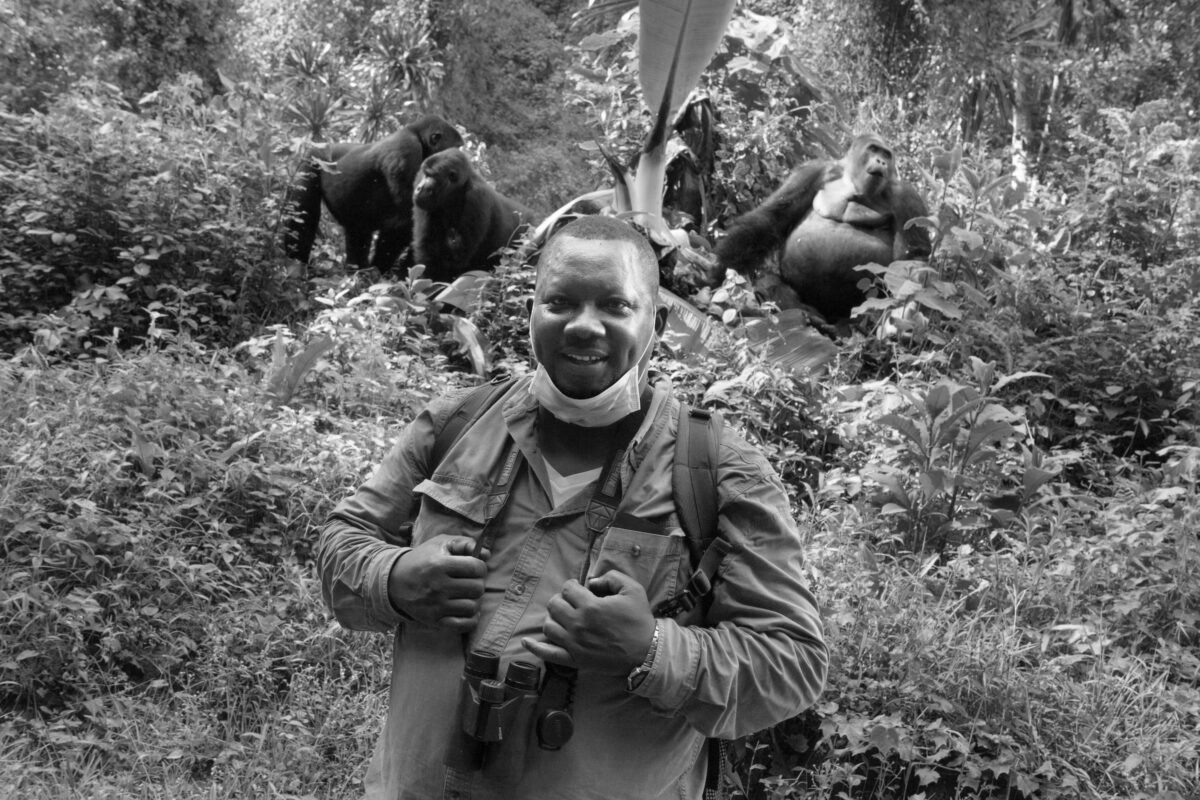
He was almost always smiling. In eastern Congo, where war and poverty have long eroded hope, that smile and the restless energy behind it mattered as much as any conservation plan. Dr. Augustin Kanyunyi Basabose, who died suddenly on August 18th, 2025, gave communities and colleagues alike the sense that protecting gorillas was not just a duty but a possibility. In the Mikeno Sector of Virunga National Park, where mountain gorillas have endured despite decades of conflict, many credited his outlook with helping people believe that endurance was worth sustaining.
Born on Idjwi Island in Lake Kivu, he grew up with his grandmother’s tales about animals, which fixed in him the idea that his life’s work lay with nature. A PhD in zoology at Kyoto University confirmed it. His thesis on chimpanzee ecology marked him as one of the first Congolese primatologists. That rarity brought responsibility.
“I felt myself responsibility to go back home and inspire those young ones so that they can continue the research and the conservation and help the whole world to understand what is happening in DRC,” he said.
He did so with resolve. As a leader of the International Gorilla Conservation Program he sharpened ranger-based monitoring across the Virunga Massif and Bwindi. Later, he founded Primate Expertise (PEx), a Congolese NGO that placed equal weight on science and people. Gorillas could not be saved without communities, he argued, so PEx dismantled snares, tracked apes with cameras, and planted food and medicinal trees germinated from seeds in gorilla dung. His “Ape Trees” initiative spread more than 60,000 seedlings, yielding forest cover, household income, and new pride.
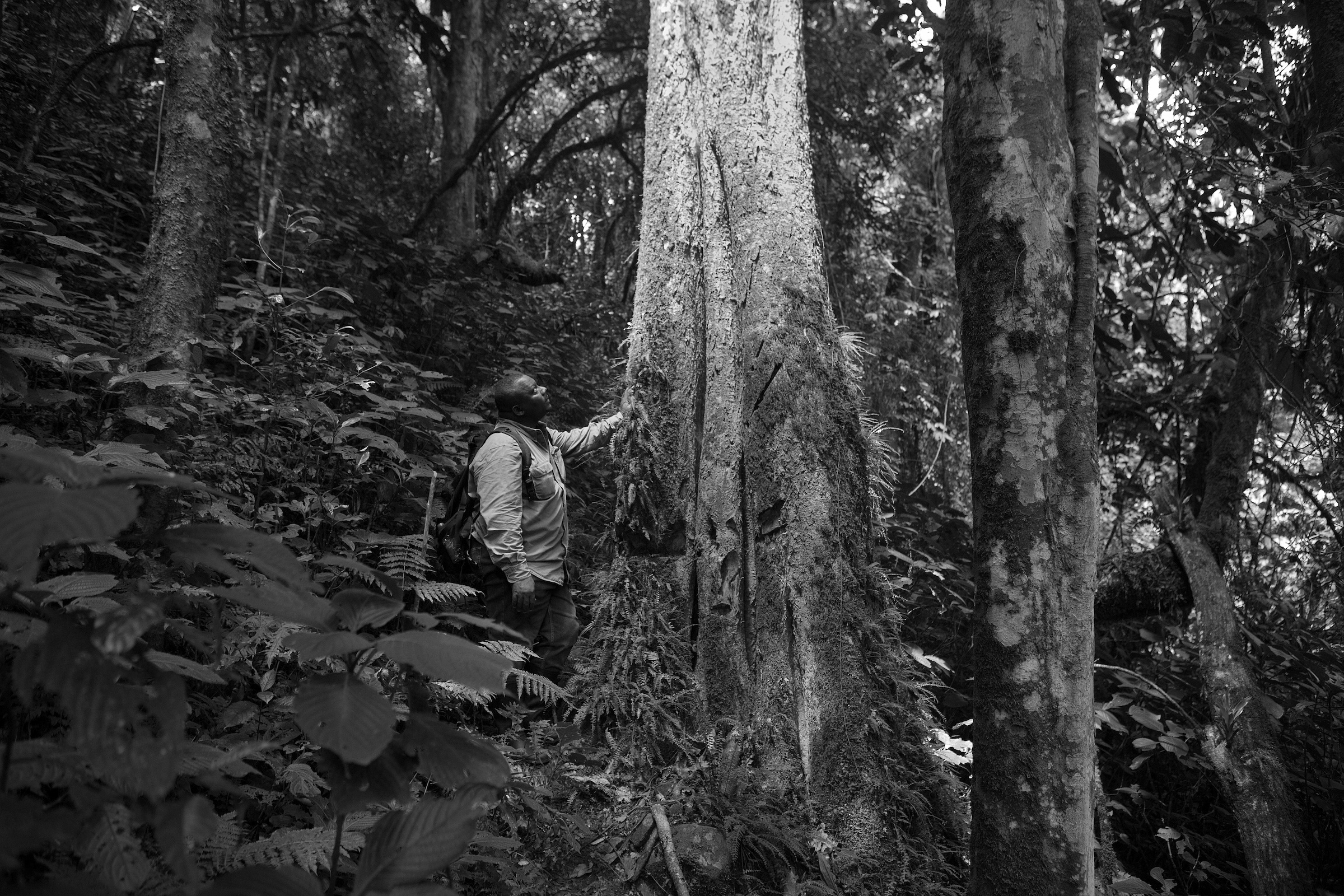
Grauer’s gorilla, a critically endangered subspecies, was at the core of his work. He authored more than 50 peer-reviewed papers and co-led the 2018 reassessment of the mountain gorilla’s conservation status. Yet his concern was always wider. He trained hundreds of students at Congolese and Rwandan universities, served on the IUCN Primate Specialist Group, and urged international collaborators to elevate local leadership. The work, he said, “is important and I’m very happy because what I took as a decision is working.”
Nowhere is his influence more visible than in eastern Congo’s upland forests, where gorilla births are outpacing deaths for the first time in years. In a region where the outlook for peace has lately brightened, the sight of gorillas holding strong owes something to one man’s insistence on smiling in the face of doubt—and on teaching others to do the same.
