

For decades, scientists have warned that humanity is driving a sixth mass extinction, with species disappearing at rates far above the natural background level. Yet new research published in Proceedings of the Royal Society B suggests a more complicated picture. Examining 912 documented extinctions over the past 500 years, Kristen Saban and John Wiens of the University of Arizona found that losses surged through the 19th and early 20th centuries before declining. Extinction rates for vertebrates, arthropods, and plants have generally slowed during the past century. The finding contradicts the familiar narrative of an accelerating collapse—but it offers little comfort.


The apparent pause may reflect biases in where scientists have looked, not a reprieve for nature. Most recorded extinctions occurred on islands, where invasive rats, pigs, and goats decimated native species. Today, the greatest threats—deforestation, pollution, and climate change—are continental, where ecosystems erode gradually before vanishing altogether.
“Past extinctions do not reflect current and future threats,” Wiens cautions.
Indeed, the study undermines the idea that historical rates can predict what lies ahead. Mollusks, for instance, account for many documented losses, while arthropods—three-quarters of all animal species—remain barely studied. Only about 7.5% of known plants and animals have been formally assessed by the IUCN.
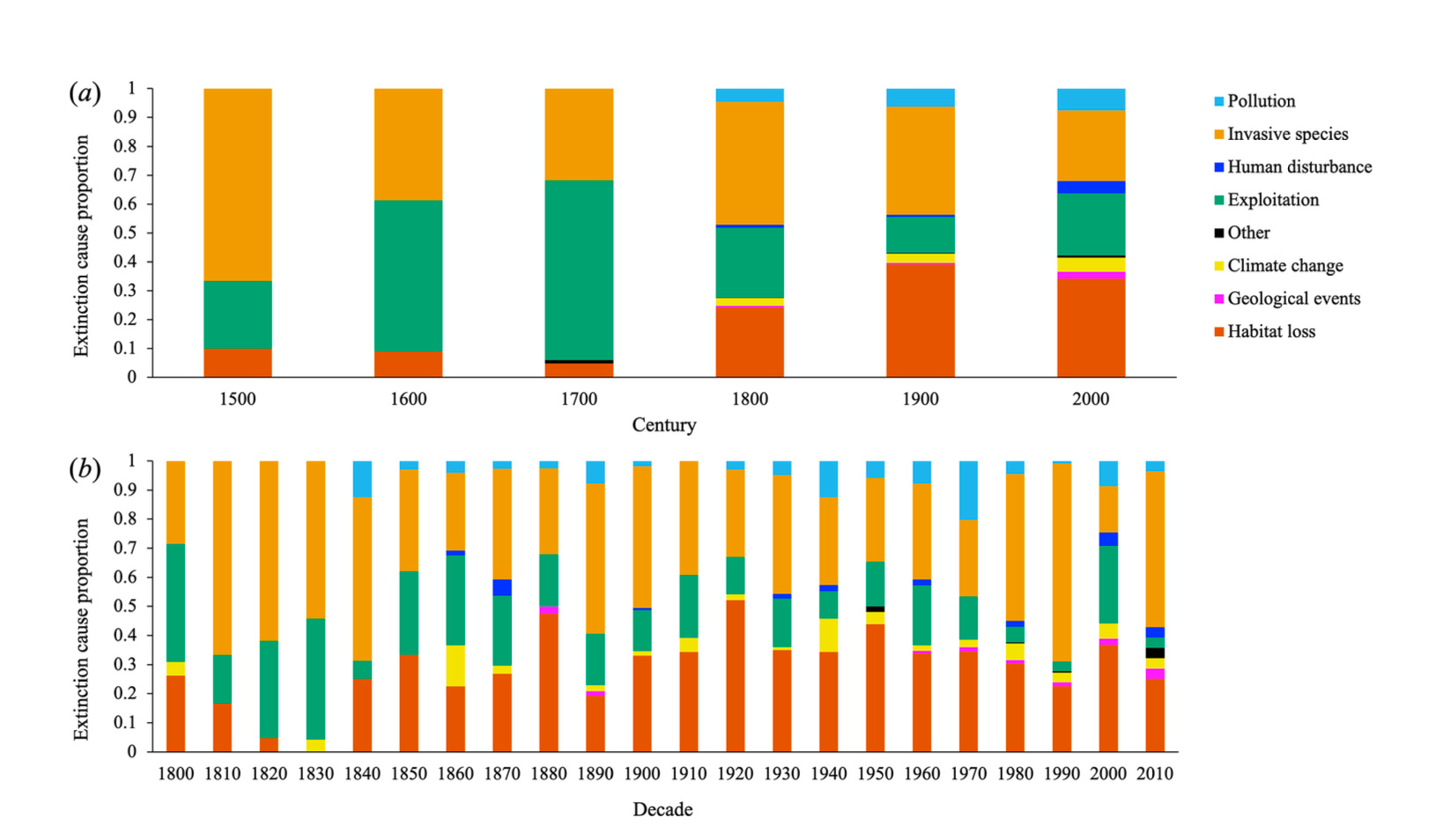
Geography also shapes extinction’s signature. Nearly two-thirds of the 912 extinct species lived on islands, with Hawaii alone representing almost a quarter of all such losses. On continents, three-quarters of extinctions occurred in freshwater systems, while marine extinctions remain rare—so far. Over time, the causes of extinction have shifted: invasive species once dominated; habitat destruction and climate change now lead.
Still, conservation has shown that decline is not inevitable. A 2023 Science analysis of 665 conservation efforts found that two-thirds either improved biodiversity or slowed its loss. Invasive species eradication, habitat restoration, and protected areas were particularly effective, especially on islands. The problem is scale: local successes remain dwarfed by global pressures.
Even if outright extinctions have slowed, the unraveling of ecosystems continues. Populations shrink, elders in ecological communities disappear, and the intricate fabric of life thins. Species that remain are increasingly generalists, replacing specialists that once defined distinct habitats. The crisis, then, is not just one of extinction but of transformation. The danger, Saban argues, lies not in exaggeration but in misunderstanding.
Catastrophe is not destiny—it is a choice. Humanity can still decide whether the current slowdown marks a turning point, or merely a pause before a deeper collapse.
