
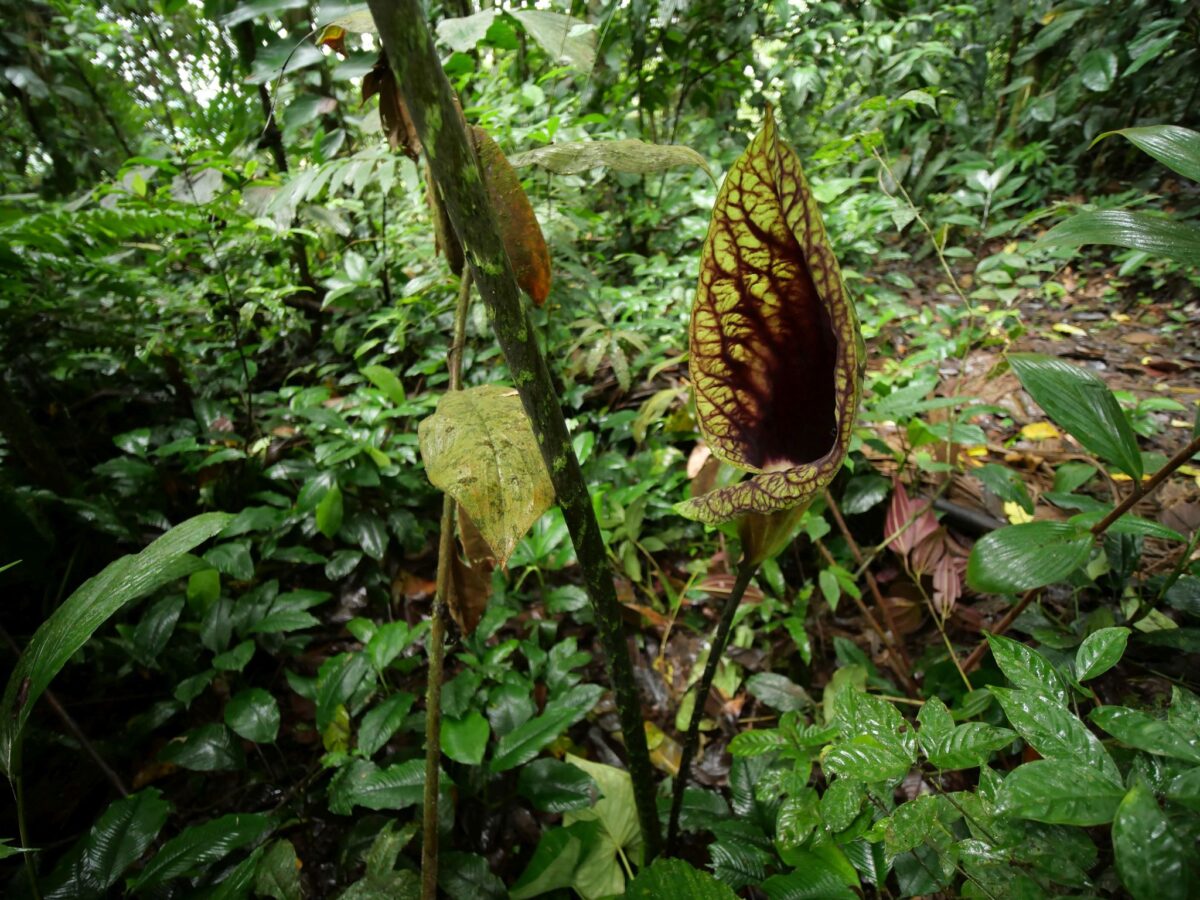
In 1991, botanists Calaway Dodson and Alwyn Gentry proposed that dozens of plant species known only from a deforested ridge in western Ecuador—Centinela—had likely gone extinct. The idea became known as the “Centinelan extinction hypothesis”: that clearing a single site could cause the immediate, global loss of narrowly distributed species.
The claim was influential. It offered a concrete example of how biodiversity loss might unfold in tropical forests. It also rested on a deeper uncertainty. In poorly surveyed systems, absence of records is often treated as absence of species.
A 2024 reassessment revisited Centinela with decades of additional data, including herbarium records, literature, expert input, and targeted fieldwork. Nearly all species once thought endemic to the site have since been found elsewhere. Of 98 putative microendemics, 99% are now known from other locations.
Forest loss in western Ecuador remains extensive, and many species are under pressure. But the mechanism proposed—that clearing one ridge could eliminate dozens of globally unique plants—does not hold here. What appeared to be extinction was largely a product of incomplete sampling.
The pattern will be familiar to tropical botanists. Species often appear rare because they have been infrequently collected. As surveys expanded across northwestern South America, many plants once thought confined to Centinela were documented across broader environmental ranges. Some were found quickly when researchers searched in the right places.
The study also revisits the idea that Centinela was entirely destroyed. Although much forest has been converted, fragments remain and still support elements of the original flora.
The findings matter beyond Centinela. The study suggests that claims of immediate, site-specific extinction require stronger empirical support. Biodiversity loss remains a central concern. But it often unfolds more gradually, shaped by dispersal, population size, and landscape structure. At Centinela, the evidence points to persistence under pressure. It also shows how easily strong conclusions can emerge from limited data.
The story: Extinction—or just unseen? What Centinela reveals about biodiversity data gaps
