
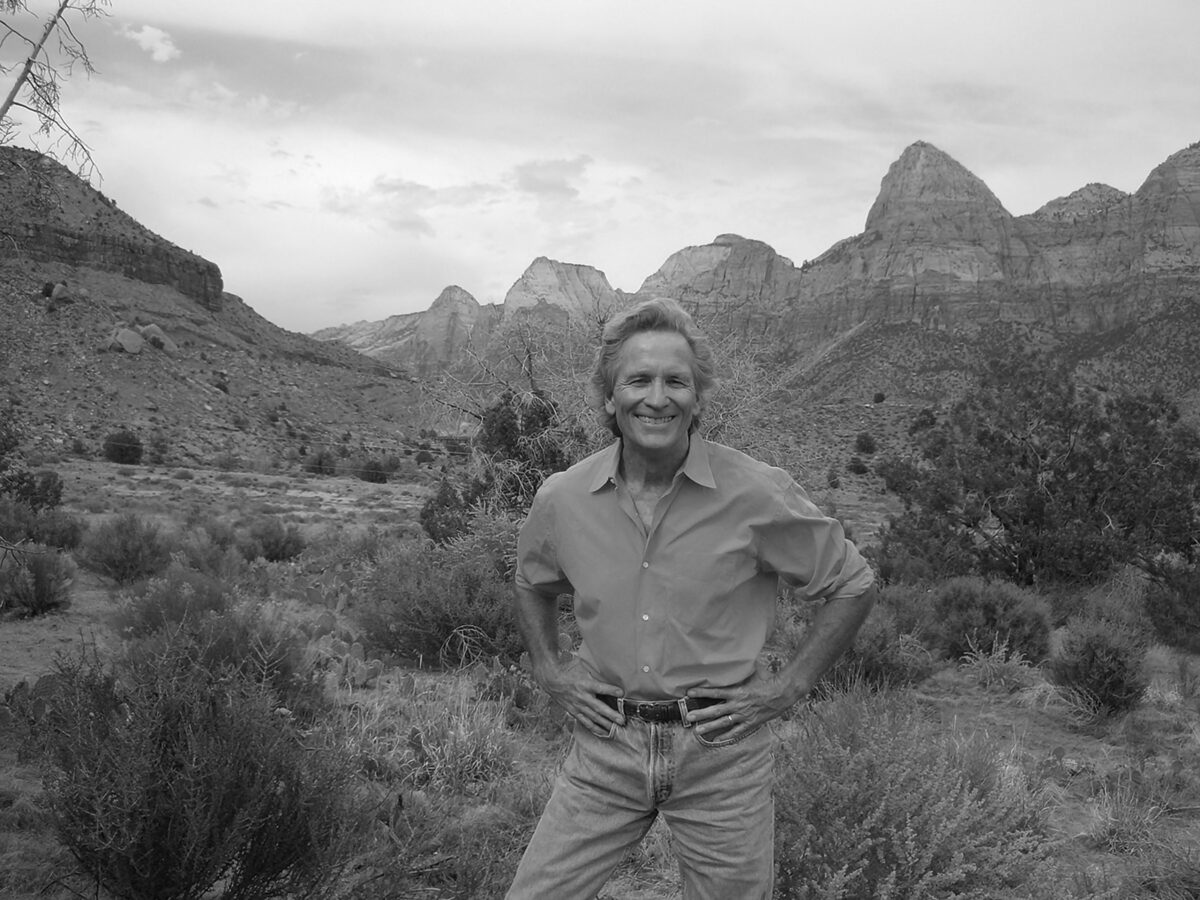
Doug McConnell spent much of his adult life doing something that sounds simple and is not: he helped people look closely at the places where they lived. For decades he turned Northern California’s open spaces, back roads, and overlooked corners into familiar destinations people came to recognize and talk about, shown not as scenery but as places shaped by human care and choice. He died on January 13th 2026, after nearly half a century on air and in the field, still working, still curious, still convinced that attention to land mattered.
He was a broadcaster, but his real subject was place. McConnell’s programs treated public land as something worth learning about, not just visiting. He did not lecture or scold. He did not argue from a studio desk. He drove, walked, hiked, climbed, and filmed. He listened to rangers, volunteers, advocates, and scientists, and explained their work in plain terms to viewers who might never attend a planning meeting or read an environmental report.
He often described himself as someone fortunate to have joined two long-held interests: nature and storytelling. “Getting a chance to do what I have been now doing for so many decades… has really been a way for me to combine my two passions in life,” he said. He was enthusiastic but controlled, grateful for access, and careful to present the work as something larger than himself.
His attachment to the natural world began early and close to home. As a boy he traveled widely across California and became deeply drawn to its range of landscapes. “I fell in love with the diversity of the state,” he said. That attachment led him toward particulars: a ridge line, a watershed, a stretch of coast, a local museum, or a small fight that kept a trail open. He was interested in how history settles into land, and how land, in turn, shapes the lives built around it.
His path into broadcasting was not straightforward. Trained in government and political science, he understood that conservation is not only about beauty. It is about decisions: who owns land, who manages it, who pays for its care, and what happens when development pressures mount. His skill was explaining those choices without oversimplifying them.
Much of his career unfolded through programs that became regional fixtures, including Bay Area Backroads and later OpenRoad with Doug McConnell. These could be mistaken for pleasant diversions. McConnell did not see them that way. A restored marsh, a protected ridgeline, a new trail—these were not just destinations. They were the results of years of planning, public funding, volunteer labor, and patience.
He was careful about credit. “It’s really the people we find and feature who deserve the credit,” he said. That attitude earned trust. His shows lingered on competence: trail crews at work, habitat restoration, controlled burns—the unglamorous tasks that keep landscapes functioning.
McConnell did not stand apart from the civic world he covered. He served on boards, advised conservation groups, and was named an honorary ranger in both the National Park and State Park systems. In his case, those honors reflected how he chose to spend his time.
At heart, Doug McConnell showed people how to move through a place with care. His programs often ended with him heading down the road, the camera pulling back as the landscape widened. It was never a promise of novelty. It was a reminder that there was always more to see, close at hand, if one took the time to pay attention.
